Brain Tumour Cases Surge Silently Across India as Doctors Sound the Alarm on Missed Warning Signs
Health News: When people think of brain tumours, they imagine something dramatic. Sudden seizures. Loss of speech. Severe neurological problems that are impossible.
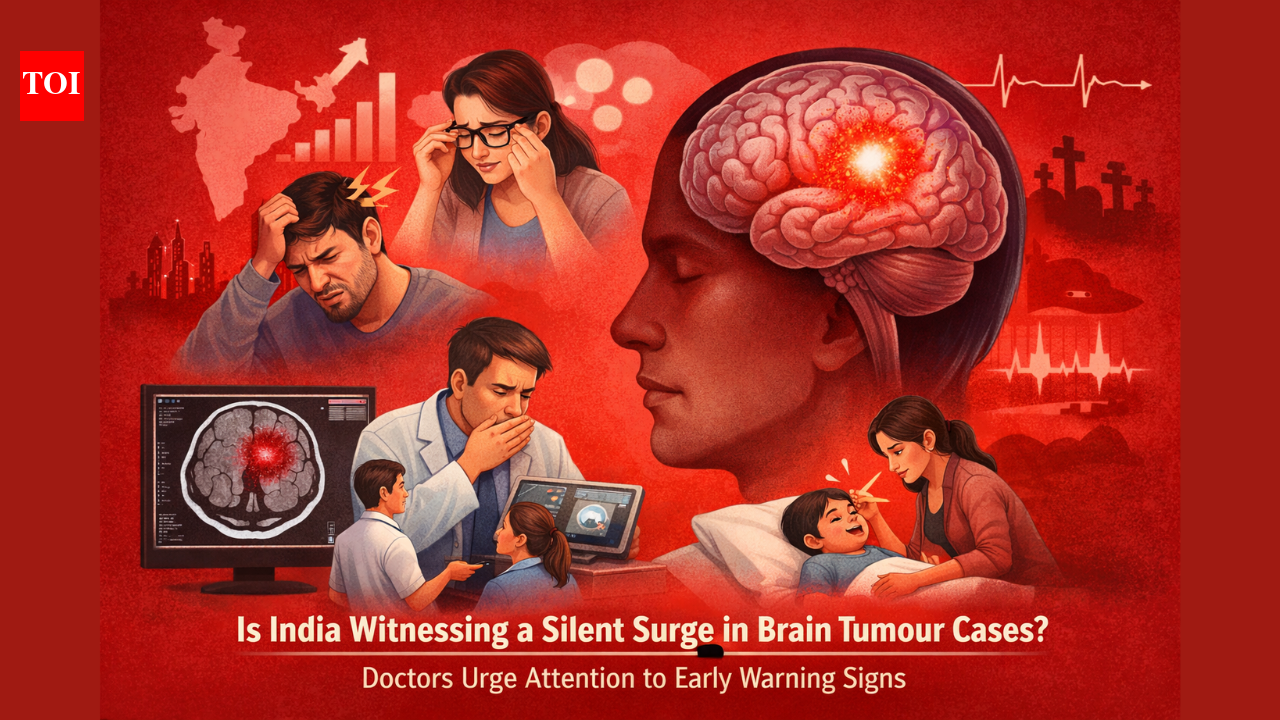
Is India witnessing a silent surge in brain tumour cases? Doctors urge attention to early warning signs.
When people think of brain tumours, they imagine something dramatic. Sudden seizures. Loss of speech. Severe neurological problems that are impossible to ignore. But doctors across India are raising the alarm about a far more insidious reality. A growing number of patients are arriving at hospitals with brain tumours that went undetected for months or even years, masked by symptoms so subtle they were dismissed as stress, fatigue, or the pressures of modern life. Medical professionals say India may be witnessing a silent surge in brain tumour cases, and the lack of awareness around early warning signs is costing lives.
According to data from leading cancer registries and hospital networks, the incidence of brain tumours in India has been steadily climbing over the past decade. While improved diagnostic technology and greater access to MRI and CT scans account for some of the increase in detected cases, neurologists and oncologists believe the rise is not solely a matter of better detection. Environmental factors, changing lifestyles, increased screen exposure, and rising stress levels are all being examined as potential contributors. Dr. Rakesh Sharma, a senior neurologist at a prominent Delhi hospital, noted that his department has seen a 20 percent increase in brain tumour diagnoses over the past five years, with a troubling number of cases presenting at advanced stages.
The early warning signs of brain tumours are often deceptively ordinary. Persistent headaches that worsen over time, unexplained nausea, subtle changes in vision or hearing, difficulty concentrating, memory lapses, and mild personality shifts are among the symptoms that patients and even general practitioners frequently overlook. Doctors emphasize that while these symptoms are far more commonly caused by benign conditions, their persistence or gradual worsening should prompt further investigation. Specialists are urging primary care physicians to maintain a higher index of suspicion and refer patients for imaging when symptoms do not resolve with standard treatment.
Health experts are calling for a multi-pronged approach to address the challenge. Public awareness campaigns, routine neurological screenings for high-risk populations, and greater investment in affordable diagnostic infrastructure in rural and semi-urban areas are among the measures being recommended. Early detection, doctors stress, can make the difference between a treatable condition and a life-threatening diagnosis. With India's healthcare system already stretched thin by the burden of chronic diseases, advocates say that paying attention to these silent warning signs is not just a medical imperative but a public health priority that can no longer be ignored.