How Your Genes and Environment Shape the Viruses Living Inside You
Analyses of biobank data show that human variation such as age, sex and genetics, particularly at the major histocompatibility complex locus, is associated with viral abundance and supports a causal link between abundance of Epstein–Barr virus …
The DNA virome varies with human genes and environments
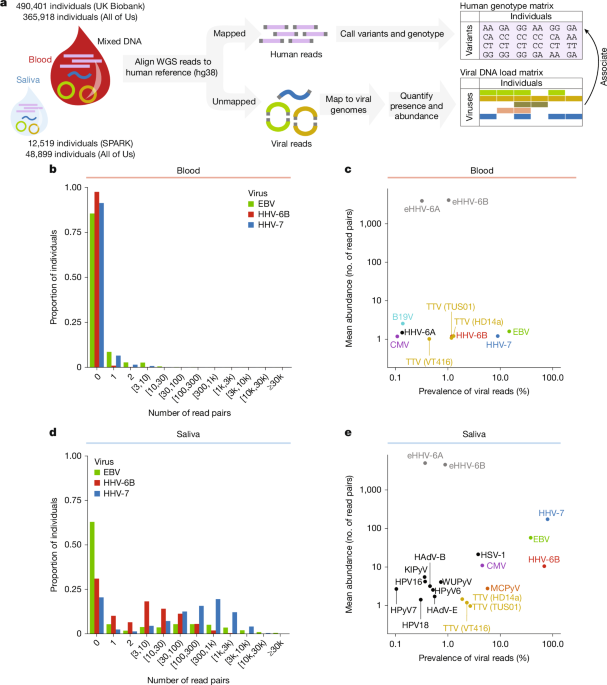
A groundbreaking study leveraging large-scale biobank data has revealed that the composition of the human DNA virome is significantly shaped by a combination of host genetics, demographic factors and environmental exposures. Researchers analyzed blood samples from thousands of participants, cataloging the presence and abundance of various DNA viruses and correlating these findings with a wide range of human traits. The results paint a comprehensive picture of how individual variation influences the viral communities that persist within the human body, opening new avenues for understanding the complex relationship between humans and their resident viruses.
Among the most striking findings, the study identified that age, sex and genetic background all play meaningful roles in determining which viruses are present and at what levels. The major histocompatibility complex locus, a region of the genome long known for its critical role in immune function, emerged as a particularly powerful genetic determinant of viral abundance. Variants at this locus were strongly associated with differences in the levels of several DNA viruses detected in participants, underscoring the central importance of immune genetics in controlling chronic and latent viral infections throughout a person's lifetime.
Of particular clinical significance, the research supports a causal link between the abundance of Epstein-Barr virus and the development of certain diseases. Epstein-Barr virus, which infects the vast majority of the global population and is known to persist in a latent state, has long been suspected of contributing to conditions such as multiple sclerosis and certain cancers. By employing genetic analyses that can help distinguish correlation from causation, the researchers found evidence suggesting that higher viral loads of Epstein-Barr virus are not merely a byproduct of disease but may actively contribute to disease risk, reinforcing calls for the development of vaccines and antiviral strategies targeting this ubiquitous pathogen.
The study represents a significant step forward in virome research by demonstrating that human genetic and environmental diversity has measurable effects on the viral populations carried by individuals. Experts say the findings could eventually inform personalized approaches to infectious disease prevention and treatment, as understanding why certain individuals harbor higher levels of specific viruses may help identify those at greatest risk for virus-associated diseases. Future research is expected to expand these analyses to include RNA viruses and to explore how changes in the virome over time interact with host health and immunity.