Ancient Giant Insects May Not Have Grown Large Due to High Oxygen Levels, Study Finds
We're now back to square one on understanding how ancient insects were able to grow so monstrously large.
Study Challenges Popular Theory on Why Primordial Bugs Were So Darn Huge
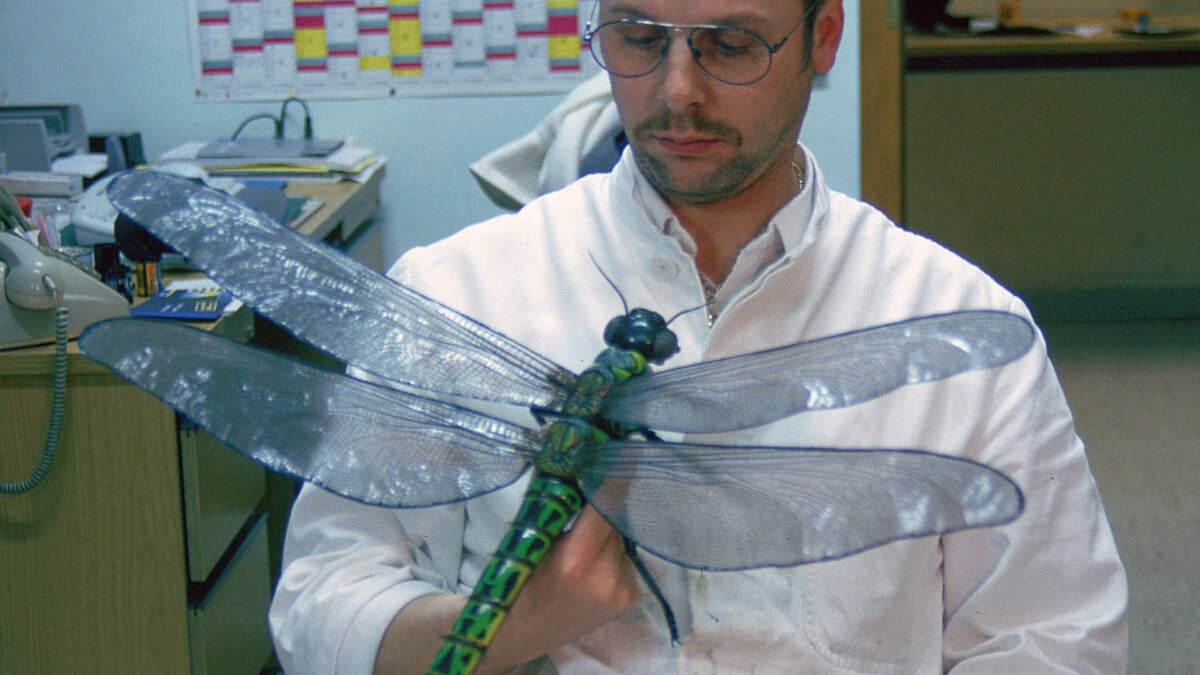
For decades, scientists have pointed to elevated oxygen levels in Earth's ancient atmosphere as the primary explanation for why insects during the Carboniferous period, roughly 300 million years ago, grew to terrifyingly large sizes. Dragonflies with wingspans exceeding two feet and millipedes stretching longer than six feet roamed the planet during this era, dwarfing their modern descendants. The prevailing theory held that higher concentrations of atmospheric oxygen, which peaked at around 35 percent compared to today's 21 percent, allowed the insects' primitive respiratory systems to support much larger bodies. A new study, however, is throwing cold water on that long-accepted explanation.
Researchers publishing their findings in a recent peer-reviewed journal conducted extensive experiments on modern insects, raising them in environments with varying oxygen concentrations to test whether increased oxygen reliably produced larger body sizes. The results were surprising and inconsistent. While some species showed modest size increases in oxygen-rich conditions, many others showed no significant change at all, and a few species actually grew smaller. The researchers concluded that the relationship between oxygen and insect body size is far more complicated than the straightforward correlation scientists had previously assumed.
The study's lead authors emphasized that oxygen likely plays some role in insect growth but cannot be considered the dominant factor driving the gigantism observed in the fossil record. They suggest that other variables, including the absence of large flying predators such as birds, ecological competition, and differences in ancient food webs, may have been equally or even more important in allowing insects to evolve such massive proportions. The team also noted that genetic and developmental factors unique to ancient insect lineages could have permitted growth patterns that simply do not exist in their living relatives.
The findings have generated significant discussion within the paleontology and entomology communities, with some researchers welcoming the challenge to established thinking and others cautioning that laboratory experiments on modern insects may not perfectly replicate conditions faced by their ancient ancestors. What is clear is that the scientific community now finds itself largely back at square one when it comes to understanding one of natural history's most fascinating mysteries. Further research combining fossil analysis, evolutionary modeling, and experimental biology will be needed to piece together why the ancient world once belonged to bugs of truly monstrous proportions.