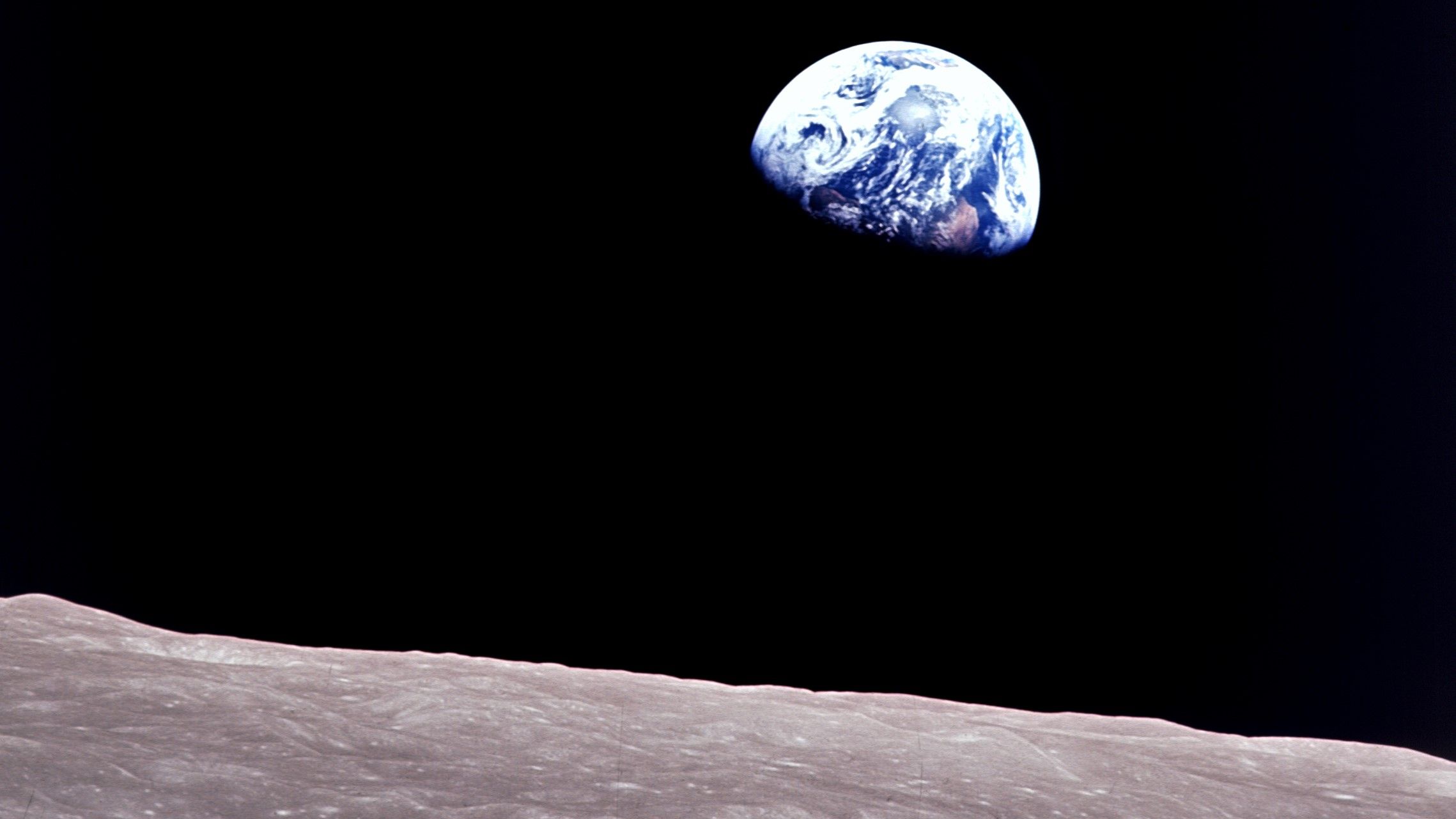
Artemis 2 Crew to Recreate Apollo 8's Iconic Earthrise Photo During Lunar Flyby
The crew also aims to capture "Earthset" as our planet slips below the lunar horizon.
The four astronauts aboard NASA's Artemis 2 mission are planning to recreate one of the most celebrated photographs in human history — the iconic 'Earthrise' image captured by Apollo 8 astronauts in 1968 — during a close lunar flyby scheduled for April 6.
The crew, consisting of NASA astronauts Reid Wiseman, Victor Glover, and Christina Koch, along with Canadian Space Agency astronaut Jeremy Hansen, will attempt to photograph Earth rising above the lunar horizon as their Orion spacecraft swings around the Moon.
In addition to the historic Earthrise recreation, the team also aims to capture what scientists and photographers are calling 'Earthset' — the moment our planet appears to sink below the Moon's rugged horizon, a perspective that no camera has fully documented in the way Artemis 2 will be positioned to achieve.
The original Earthrise photograph, taken by astronaut William Anders on December 24, 1968, is widely regarded as one of the most influential environmental images ever taken. The image showed a fragile, colorful Earth suspended in the vast darkness of space against the barren gray lunar surface, and is credited with helping spark the modern environmental movement.
Artemis 2 represents NASA's first crewed lunar mission since the Apollo 17 flight in 1972. While the mission will not land on the Moon, the lunar flyby will bring the crew closer to the lunar surface than any humans have been in more than five decades, offering a unique vantage point for photography and scientific observation.
The crew has been training extensively for the photographic objectives, working with both NASA imaging specialists and historians to understand the precise conditions that produced the original Apollo 8 image. Modern camera technology should allow the Artemis 2 team to capture the scenes in far greater resolution and detail than was possible in 1968.
Beyond the symbolic and cultural significance of the photography mission, the April 6 flyby will also serve as a critical test of Orion's systems and the crew's readiness for future lunar landing missions planned under the broader Artemis program, which ultimately aims to establish a sustained human presence on and around the Moon.