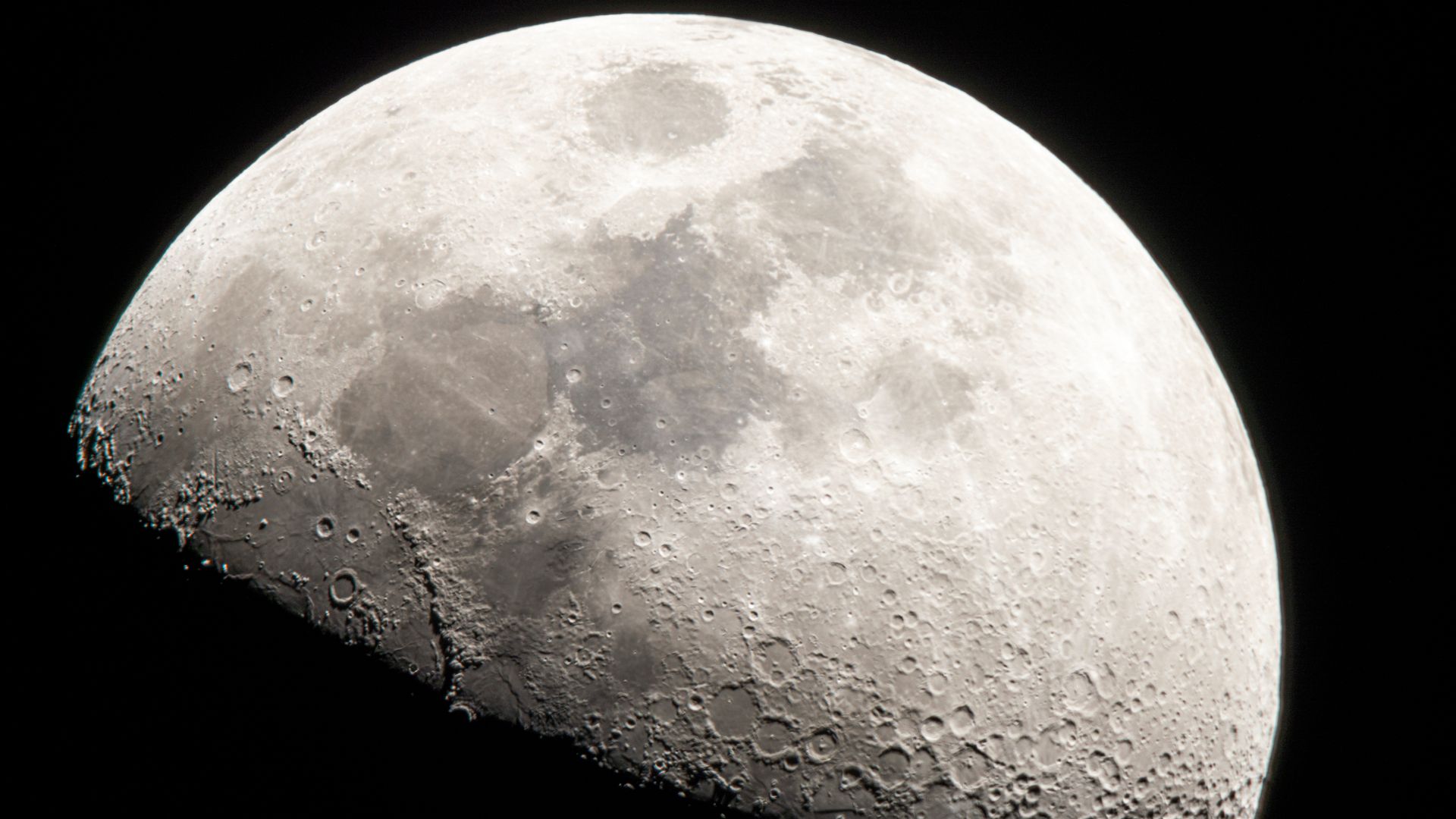
Artemis Missions Could Forever Change How Humanity Sees the Moon, Author Says
Live Science spoke with Rebecca Boyle, author of "Our Moon" about how the moon has been viewed both culturally and scientifically through history.
As NASA's Artemis program prepares to return humans to the lunar surface for the first time in more than half a century, one science writer argues the missions represent far more than a technological achievement — they signal a fundamental shift in how humanity understands and relates to the moon.
Rebecca Boyle, author of 'Our Moon: How Earth's Celestial Companion Transformed the Planet, Guided Evolution, and Made Us Who We Are,' spoke with Live Science about the moon's dual role as both a cultural touchstone and a scientific frontier throughout human history.
Boyle describes the Artemis program as 'this generation's moment,' drawing a parallel to the Apollo era, which captivated the world and reshaped scientific understanding of Earth's nearest neighbor. But she argues the stakes now are even higher, with new questions about water ice, lunar geology, and the moon's potential as a gateway to deeper space exploration driving a renewed sense of urgency.
Historically, the moon has occupied a unique space in the human imagination. From ancient calendars and religious ceremonies to the poetry of Romantic writers and the ambitions of Cold War superpowers, Earth's only natural satellite has served as a mirror for human aspiration and anxiety alike. Boyle traces this rich cultural lineage in her book, illustrating how our perception of the moon has evolved dramatically across civilizations.
Scientifically, the moon has proven equally transformative. Studies of lunar rocks brought back by Apollo astronauts reshaped theories about the formation of the solar system, and modern research continues to reveal surprising complexity beneath the moon's deceptively barren surface. The discovery of water ice in permanently shadowed craters near the lunar poles has added particular excitement to the Artemis mission objectives.
Boyle emphasizes that the Artemis program's inclusion of the first woman and first person of color to walk on the moon adds a new dimension to the cultural narrative. She believes this broadening of who gets to participate in lunar exploration will influence how future generations think about space, science, and human potential.
Ultimately, Boyle suggests that every era gets the moon it needs — a reflection of its deepest fears, hopes, and questions. As Artemis moves forward, she believes humanity stands at the threshold of yet another reinvention of its relationship with the moon, one that will be shaped equally by cutting-edge science and the enduring human need to look upward and wonder.