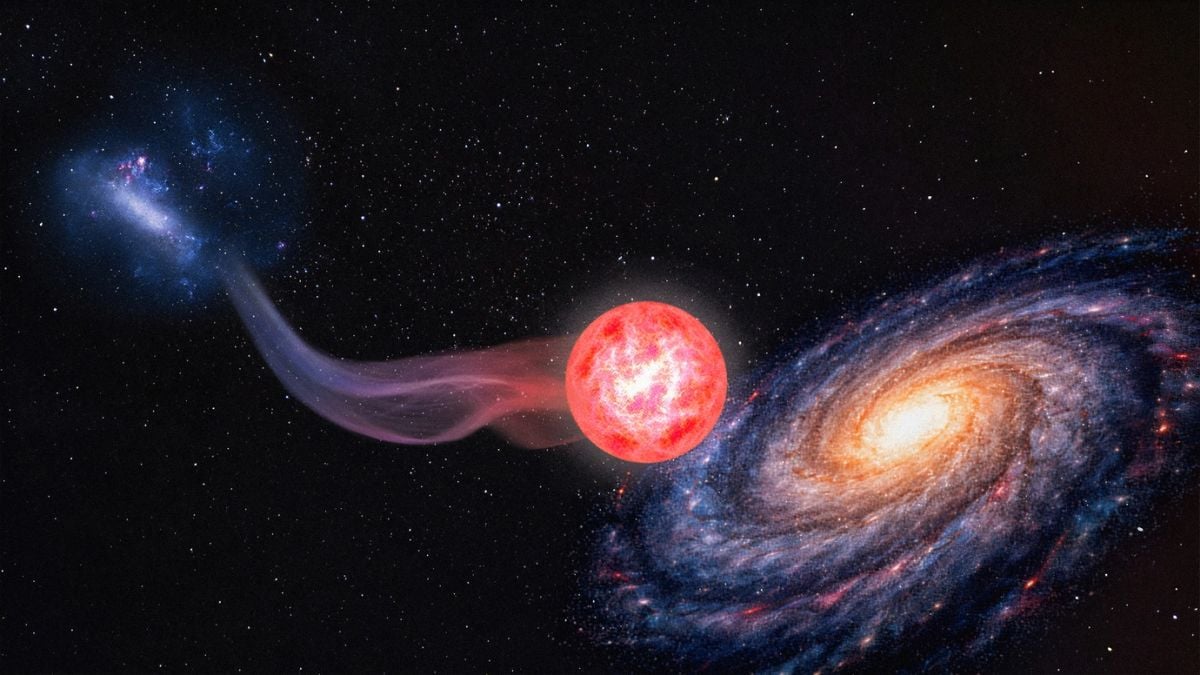
Astronomers Discover the Milky Way's Most Pristine Ancient Star Right in Our Cosmic Backyard
A star right here in the Milky Way galaxy is the purest ancient star astronomers have found to date.
Astronomers have identified the most chemically pure ancient star ever found, and it resides surprisingly close to home — right within our own Milky Way galaxy. The discovery is being hailed as a landmark find in the study of stellar archaeology and the early universe.
The star stands out because of its extraordinarily low metal content, meaning it contains almost none of the heavier elements that typically accumulate in stars over billions of years of cosmic evolution. Stars like this are considered living relics of the universe's earliest epochs, offering a rare window into conditions that existed shortly after the Big Bang.
Astronomers classify ancient, metal-poor stars as Population II or even Population III candidates, the latter being theoretical first-generation stars born from the primordial hydrogen and helium that filled the early cosmos. Finding a star this pristine challenges existing models about stellar formation and the chemical enrichment of galaxies over time.
The proximity of this star within the Milky Way makes it an exceptional research opportunity. Unlike ancient stars discovered in distant dwarf galaxies or the outer halo, this one is close enough for detailed spectroscopic analysis, allowing scientists to study its composition with unprecedented precision.
Researchers used high-resolution spectroscopy to measure the star's elemental abundances, confirming its record-breaking purity. The data suggest the star may have formed from gas that was enriched by only a single generation of earlier stars, or possibly none at all.
The finding raises new questions about how such a pristine object survived in a galaxy as chemically active as the Milky Way. Scientists believe studying this star further could help reconstruct the sequence of nucleosynthesis events that seeded the universe with the building blocks of planets and life.
Future observations using next-generation telescopes are already being planned to probe this ancient star in even greater detail. Astronomers say it could become one of the most studied objects in the night sky, serving as a cornerstone for our understanding of early stellar and galactic evolution.