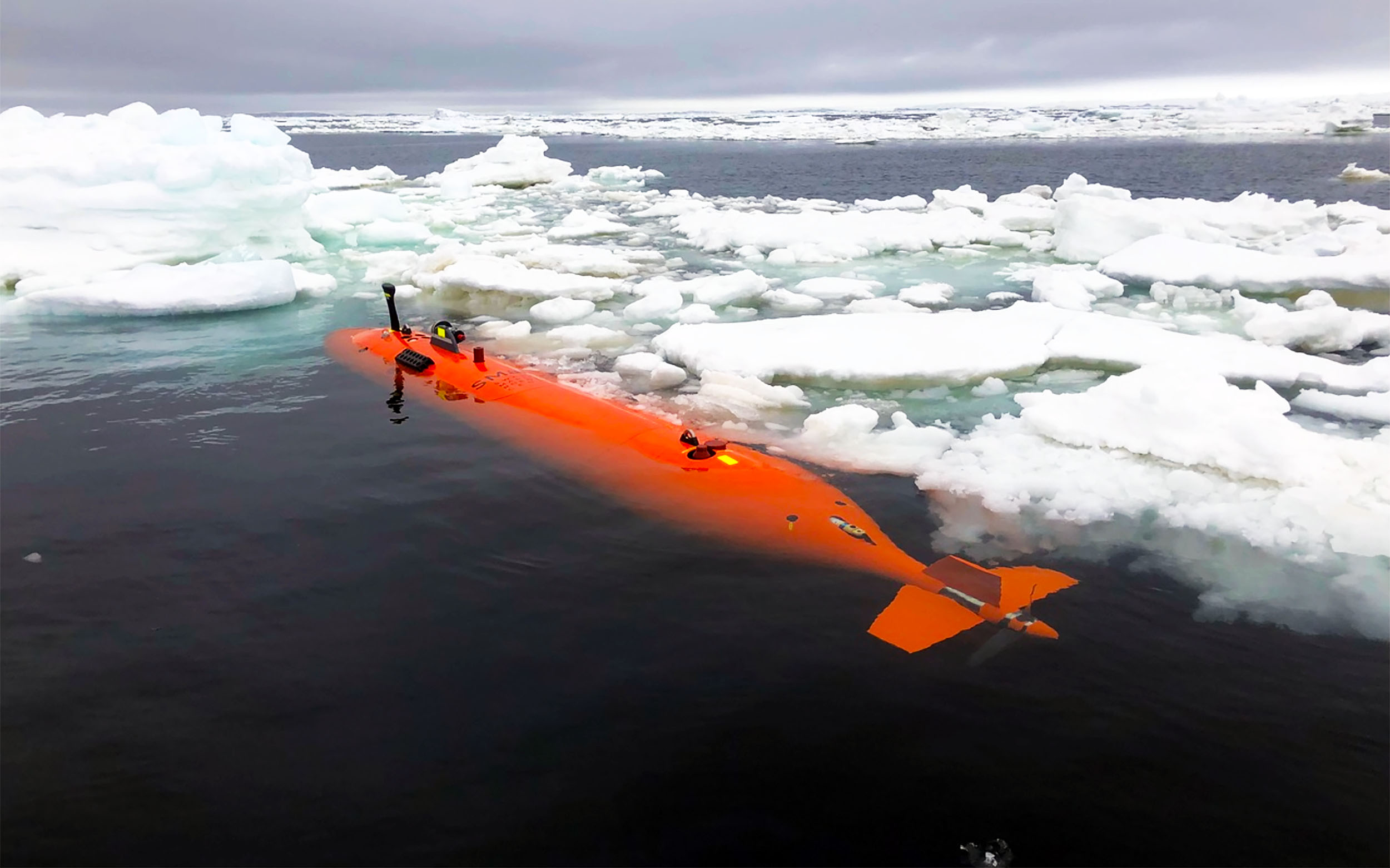
Autonomous Submarine Discovers Mysterious Structures Under Antarctica's Ice Shelf Before Vanishing
An autonomous submarine named Ran discovers strange structures under the Dotson Ice Shelf in Antarctica, before mysteriously disappearing.
An autonomous submarine named Ran has made a startling discovery beneath Antarctica's Dotson Ice Shelf, capturing data on previously unknown underwater structures before mysteriously losing contact with researchers and disappearing.
The Swedish-built submarine, operated by the University of Gothenburg, was deployed as part of a scientific mission to study the melting patterns of Antarctic ice shelves and the ocean currents flowing beneath them. During its dive, Ran transmitted data revealing strange, unidentified formations on the seafloor below the ice — structures that scientists had not previously observed in the region.
Researchers described the structures as unexpected and are now working to analyze the data transmitted before contact was lost. While the exact nature of the formations remains unclear, scientists say they could shed new light on the geological and glaciological processes occurring beneath one of Antarctica's most closely watched ice shelves.
The Dotson Ice Shelf, located in West Antarctica, has been a focal point for climate scientists due to its accelerating melt rates driven by warming ocean water intruding beneath the ice. Understanding what lies on the seafloor beneath it is considered critical for modeling future sea level rise.
Contact with Ran was lost during the mission, and the submarine has not been recovered. The team has not yet confirmed whether the vehicle was damaged, became trapped under the ice, or suffered a technical failure. Losing such a sophisticated piece of equipment represents a significant setback for the research program.
Despite the loss, scientists emphasize that the data already retrieved from the mission is valuable and could take months to fully interpret. The discovery of unknown structures adds an intriguing new dimension to ongoing research into Antarctica's ice and ocean systems.
The incident underscores both the promise and the peril of using autonomous vehicles to explore the most remote and hazardous environments on Earth. Researchers say missions like Ran's are essential for gaining direct observations in areas that are otherwise entirely inaccessible to humans.