Ghost Ranch's Ancient Crocodile Relative Identified After 80 Years Gathering Dust in Museum Basement
During the Triassic, a newly described species related to modern crocodiles and alligators stalked prey on land, not the water, a new study finds.
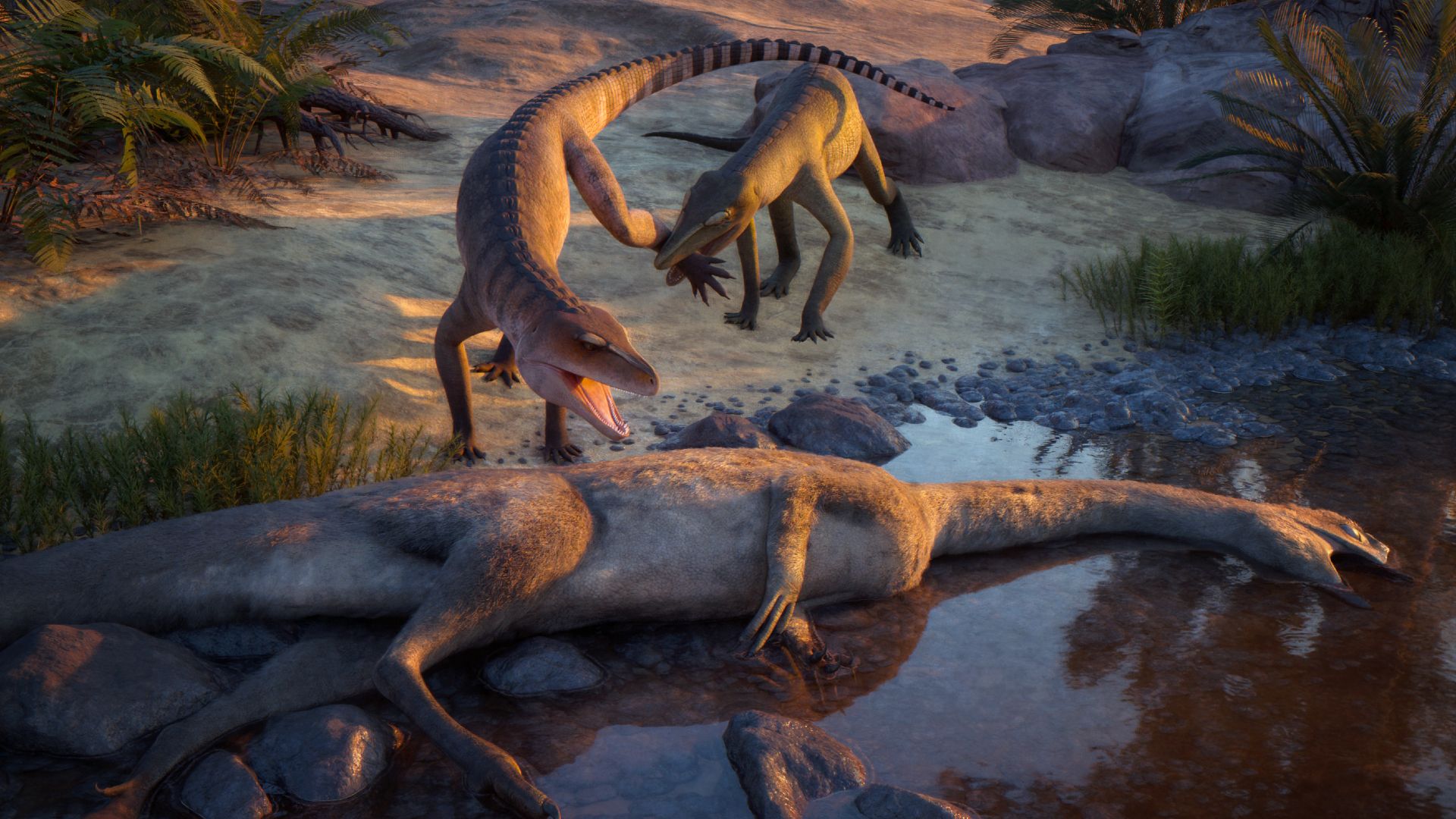
A fearsome land-dwelling relative of modern crocodiles and alligators that roamed the Earth during the Triassic period has finally been formally identified by scientists, nearly 80 years after its fossilized remains were first collected from the famous Ghost Ranch site in New Mexico.
The newly described species belongs to a group of ancient reptiles known as pseudosuchians, the ancestral lineage that eventually gave rise to today's crocodilians. Unlike their semi-aquatic descendants, this creature was built for life on land, actively pursuing prey across the Triassic landscape roughly 220 million years ago.
The fossils had languished largely unstudied in a museum collection since they were originally excavated in the mid-20th century. Ghost Ranch, a site already legendary among paleontologists for its extraordinary concentration of Triassic-era remains, yielded the bones decades ago, but they were never subjected to rigorous modern analysis until now.
Researchers used contemporary imaging techniques and comparative anatomy to establish that the specimens represent a species entirely new to science. Their findings, published in a peer-reviewed journal, shed new light on the remarkable diversity of crocodile-line archosaurs during the Triassic period, a time when the group was far more varied and widespread than it is today.
The discovery challenges common assumptions about crocodilian relatives being water-dependent ambush predators. During the Triassic, pseudosuchians occupied a wide range of ecological niches, and this newly named species appears to have been an agile terrestrial hunter competing for dominance in ecosystems it shared with early dinosaurs.
Scientists say the find underscores the importance of revisiting historical museum collections, many of which harbor specimens that were collected before modern analytical methods existed. Advances in technology now allow researchers to extract significant new information from fossils that were once thought to be fully understood or too fragmentary to be useful.
Ghost Ranch continues to be one of North America's most productive fossil sites, and researchers believe further examination of existing collections from the area could yield additional surprises. The formal naming of this long-overlooked species is being celebrated as a reminder that extraordinary discoveries do not always require new fieldwork — sometimes they are already waiting on a shelf.