Giant Insects Once Ruled Earth — and Scientists Still Can't Explain Why
Scientists rethink why giant insects once ruled the skies, finding oxygen may not explain their size or disappearance.
Earth's First Insects Were Massive, Some Having Wingspans Over Two Feet Long, and Scientists Aren't Sure Why
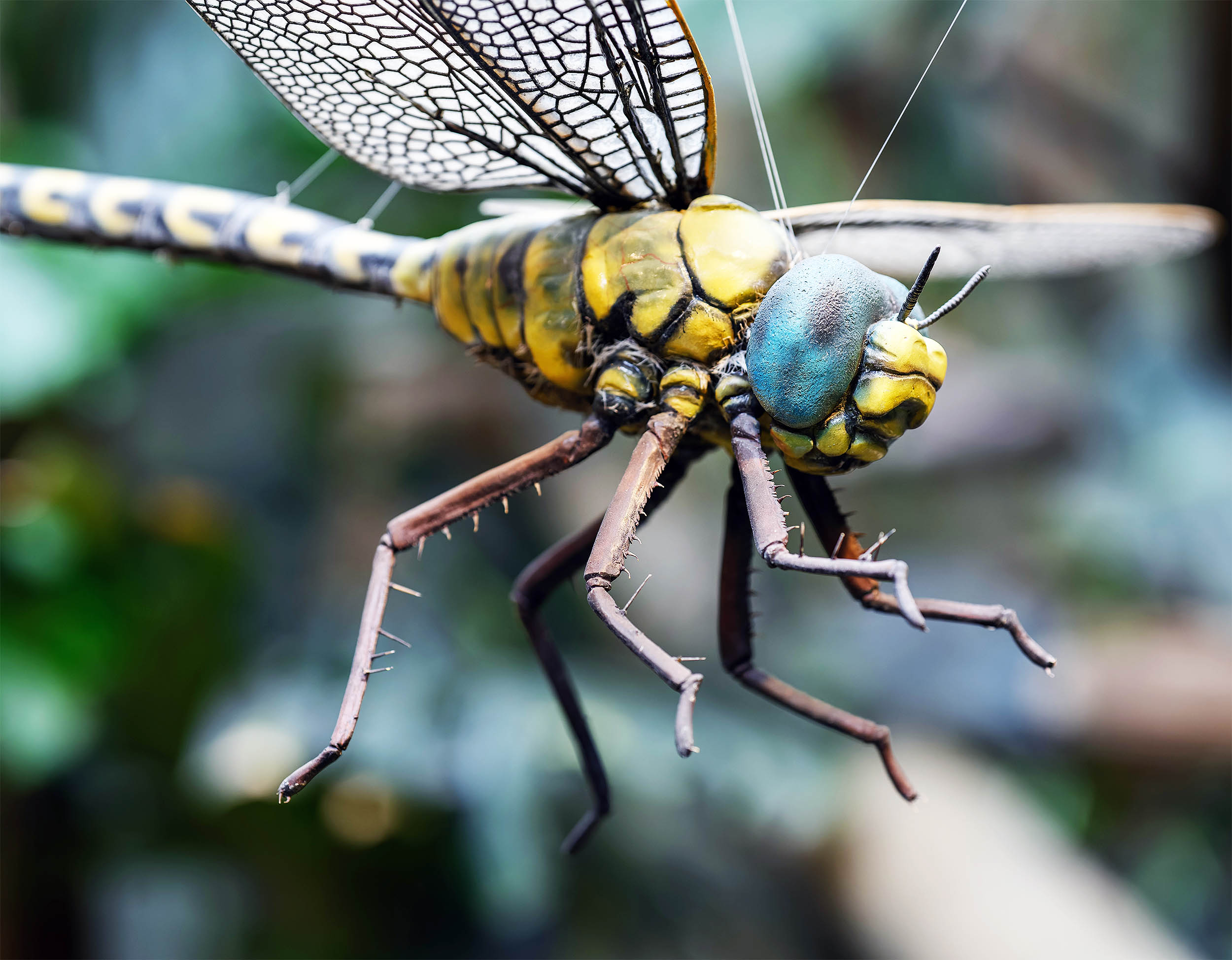
For hundreds of millions of years before birds and bats took to the skies, enormous insects dominated the air above ancient forests and swamps. Among the most striking of these creatures were the griffinflies, dragonfly-like predators that boasted wingspans exceeding two feet and patrolled the skies of the Carboniferous and Permian periods. These giants, along with enormous millipedes and other oversized arthropods, have long fascinated scientists trying to understand what conditions allowed insects to grow to such extraordinary proportions. Now, new research is challenging the most widely accepted explanation for their remarkable size.
For decades, the leading theory held that elevated atmospheric oxygen levels during the Carboniferous period, which reached concentrations as high as 35 percent compared to today's 21 percent, fueled the growth of giant insects. Because insects breathe through a network of tiny tubes called tracheae, higher oxygen concentrations would theoretically allow these passive respiratory systems to support larger bodies. The idea was elegant and intuitive, and it became a staple of paleontology textbooks and museum exhibits around the world.
However, recent studies have begun to poke significant holes in this oxygen hypothesis. Researchers have pointed out that the largest insects did not always correspond neatly with peak oxygen levels, and that some giant species persisted well into periods when oxygen had declined substantially. Additionally, experiments with modern insects raised in high-oxygen environments have produced only modest increases in body size, far short of what would be needed to explain the ancient giants. Some scientists now suggest that the absence of aerial vertebrate predators and competitors may have been a more important factor, giving insects free rein to evolve larger body sizes without the pressure of being hunted or outcompeted in flight.
The debate is far from settled, and researchers acknowledge that the answer likely involves a combination of ecological, evolutionary, and atmospheric factors. What remains clear is that the disappearance of giant insects coincided with the rise of flying vertebrates, particularly early reptiles and eventually birds, which would have posed serious threats to large, slow-flying arthropods. As scientists continue to study fossilized specimens and refine atmospheric models of the ancient Earth, the mystery of why insects once grew so astonishingly large — and why they never did again — continues to captivate researchers and the public alike.