How Humans Evolved to Conquer Earth's Harshest Environments, From Ocean Depths to Arctic Tundra
In the book "Adaptable," evolutionary anthropologist Herman Pontzer explores human biology and development, and how people have evolved to survive everywhere on Earth.
For most species, survival depends on staying within a narrow ecological niche. Humans, however, have proven remarkably different. From the frozen plains of Siberia to the scorching deserts of the Sahara, Homo sapiens have found ways not only to survive but to thrive in virtually every environment on the planet — and a new book examines exactly how.
In 'Adaptable,' evolutionary anthropologist Herman Pontzer dives deep into human biology and development, tracing the ways our species has evolved — both genetically and culturally — to meet the demands of wildly different environments. Pontzer, a professor at Duke University and a leading researcher in human metabolism, draws on decades of fieldwork and laboratory science to tell the story of our species' extraordinary flexibility.
Among the most striking examples Pontzer highlights are the Bajau people of Southeast Asia, a seafaring community whose members have spent generations freediving for food. 'They could spend 4 or 5 hours per day underwater,' Pontzer notes, describing how Bajau divers have developed measurably larger spleens than their land-dwelling neighbors — a biological adaptation that allows them to store more oxygen-rich red blood cells and stay submerged far longer than the average person.
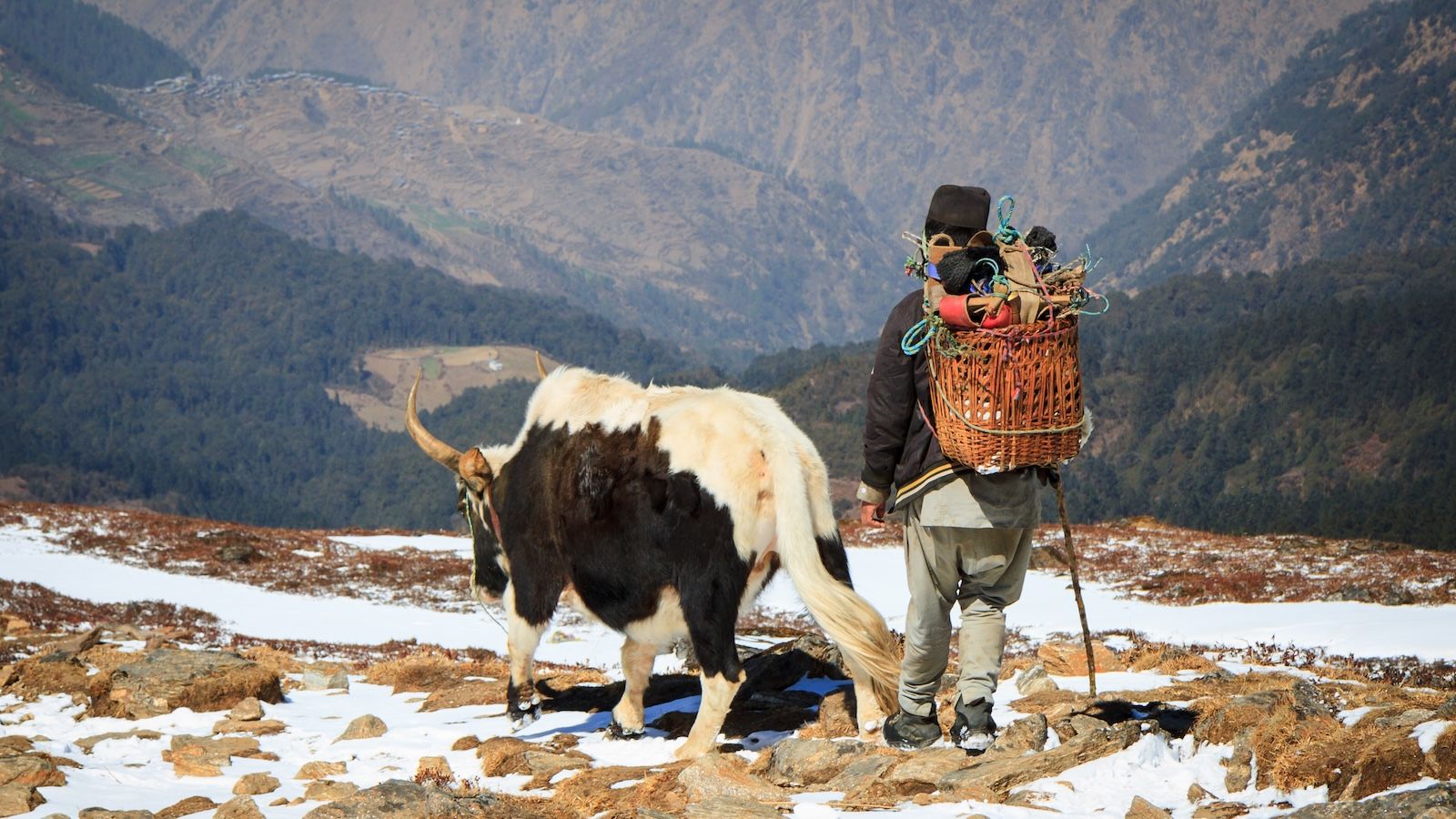
This kind of genetic adaptation, Pontzer explains, sits alongside a broader set of physiological and behavioral tools that make humans uniquely suited to colonize new environments. Whether it is the ability of Tibetan highlanders to process oxygen efficiently at extreme altitudes, or the way Indigenous Arctic communities metabolize fat-rich diets with exceptional efficiency, the human body has shown a capacity for change that continues to surprise researchers.
Pontzer is careful to distinguish between adaptations that occur over generations through natural selection and those that happen within a single lifetime through development and acclimatization. A child raised at high altitude, for example, will develop a larger lung capacity than one raised at sea level — a developmental flexibility baked into human biology from birth.
The book also grapples with the limits of human adaptability, and what our evolutionary history means for modern health. Pontzer, whose previous work on the Hadza hunter-gatherers of Tanzania challenged long-held assumptions about exercise and calorie burning, argues that many chronic diseases plaguing contemporary societies are the byproduct of a mismatch between the environments we evolved for and the sedentary, calorie-dense lives millions now lead.
'Adaptable' arrives at a moment when questions about human resilience feel especially urgent, as climate change threatens to test the boundaries of what bodies and communities can endure. Pontzer's work offers both a scientific framework for understanding our past flexibility and a sobering reminder that adaptation, whether biological or cultural, takes time that a rapidly warming world may not afford.