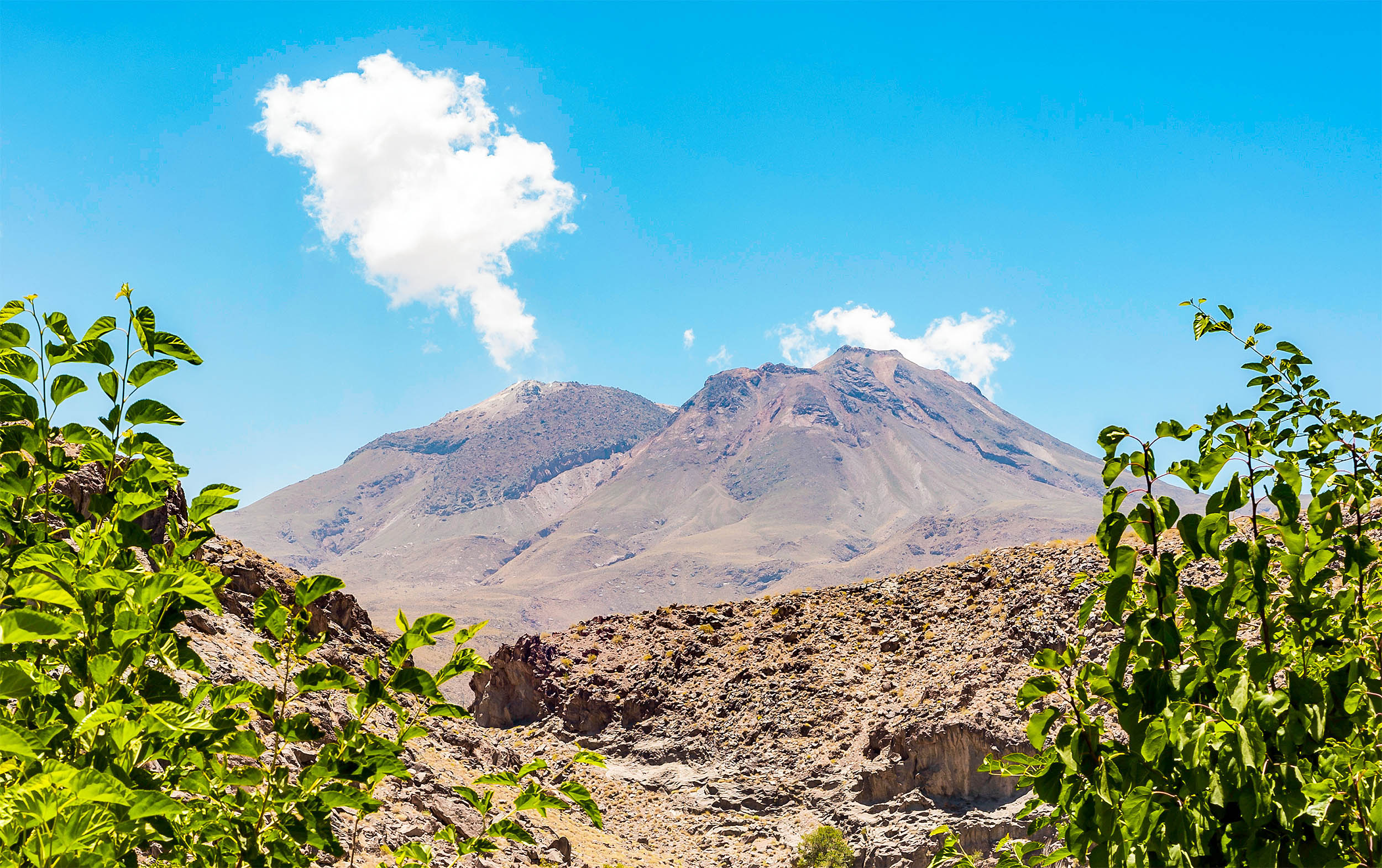
Iran's Taftan Volcano Stirs After 700,000 Years of Dormancy
Taftan volcano in southeastern Iran rose 3.5 inches over 10 months, signaling that it is waking up after 700,000 years of dormancy.
A remote volcano in southeastern Iran has shown signs of reawakening after lying dormant for approximately 700,000 years, raising concern among geologists and regional authorities monitoring the site.
Taftan volcano, located near the Pakistan border in Sistan and Baluchestan Province, rose by 3.5 inches over a period of just 10 months, according to researchers tracking ground deformation at the site. The uplift is considered a strong indicator of renewed volcanic activity beneath the surface.
Scientists believe the swelling is caused by the movement of magma or hydrothermal fluids pushing upward through the earth's crust. While such ground deformation does not necessarily mean an eruption is imminent, experts say the data warrants close and continued observation.
Taftan, which stands at roughly 4,050 meters above sea level, is considered a stratovolcano — a steep, conical structure built from layers of hardened lava and volcanic ash. Its last known eruption is estimated to have occurred around 700,000 years ago, making its current activity all the more extraordinary.
Researchers are now deploying additional monitoring equipment around the volcano to track seismic activity, gas emissions, and further ground movement. The findings have been shared with Iranian geological agencies and international volcano monitoring organizations.
While the nearest populated areas are relatively sparse, local communities and cross-border regions in Pakistan could potentially be affected if activity escalates. Authorities say there is no immediate cause for public alarm, but contingency planning is underway.
The case of Taftan highlights a broader scientific challenge: volcanoes with extremely long dormancy periods are inherently difficult to predict, as there is limited historical data to model their behavior. Geologists worldwide are paying close attention to how this ancient giant continues to evolve.