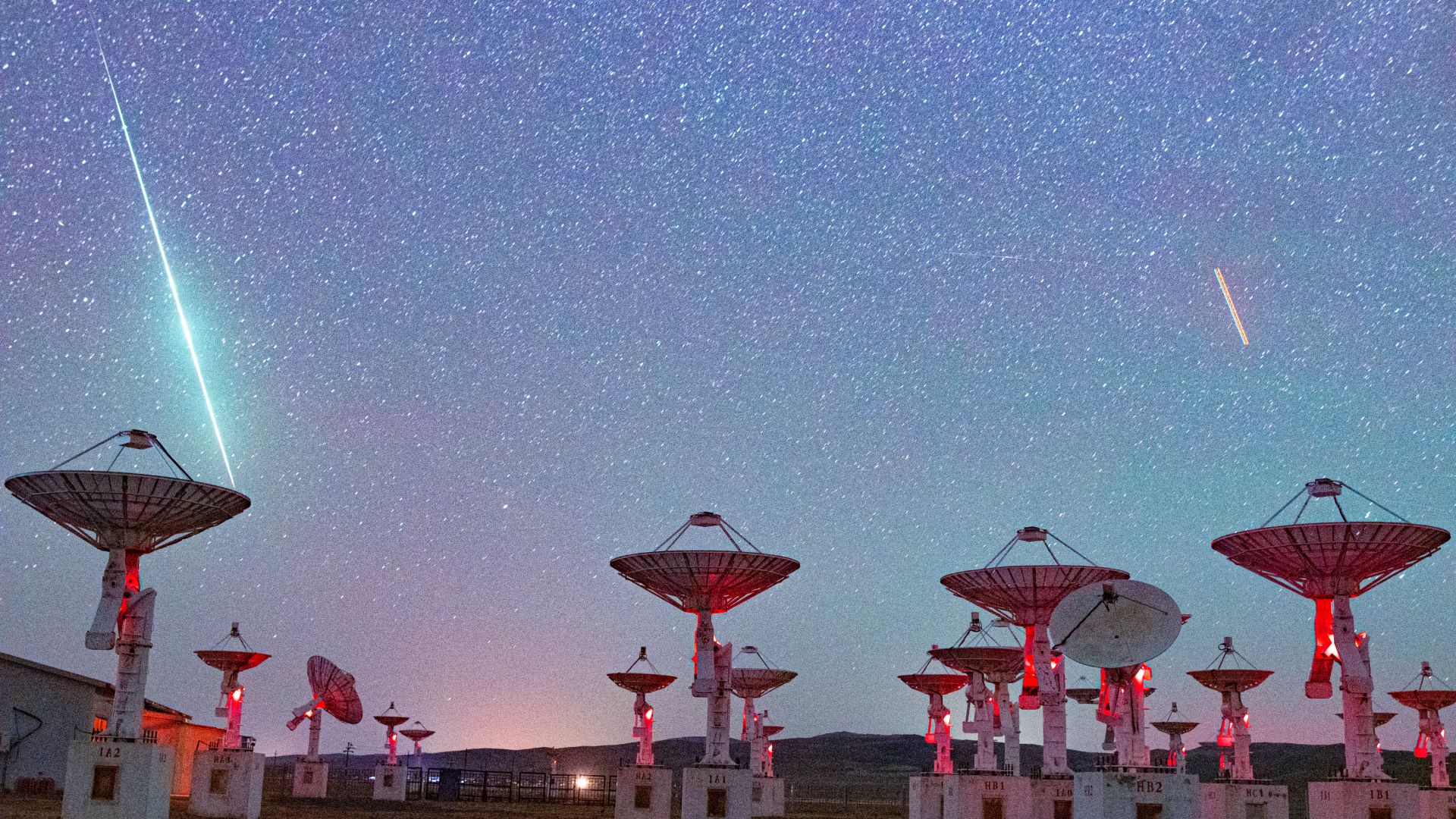
Lyrid Meteor Shower Peaks in One Week — Everything You Need to Know
The Lyrid meteor shower peaks overnight on April 21-22.
One of the oldest known meteor showers is nearly here. The Lyrid meteor shower, active each year in mid-to-late April, will reach its peak overnight on April 21 into the early morning hours of April 22, offering skywatchers a dazzling display of shooting stars streaking across the spring sky.
The Lyrids have been observed for more than 2,700 years, making them one of the most historically documented meteor showers on record. They occur as Earth passes through debris left behind by Comet Thatcher, which orbits the sun approximately once every 415 years. As fragments of the comet enter Earth's atmosphere at high speed, they burn up and create the brilliant streaks of light we see from the ground.
During peak activity, observers can typically expect to see between 10 and 20 meteors per hour under ideal conditions. Occasionally, the Lyrids produce outbursts that can spike to over 100 meteors per hour, though these surges are rare and difficult to predict. The meteors appear to radiate from the constellation Lyra, near the bright star Vega, which will be well-positioned in the northeastern sky during the peak hours.
For the best viewing experience, head to a location far from city lights and allow your eyes at least 20 to 30 minutes to adjust to the darkness. No special equipment is needed — the naked eye is actually the best tool for catching meteors, since telescopes and binoculars limit your field of view. Lie on your back and look toward the sky rather than fixing your gaze on any single point.
The peak viewing window will be in the pre-dawn hours of April 22, roughly between 2 a.m. and 5 a.m. local time, when Lyra climbs highest in the sky. Check your local forecast ahead of time, as cloud cover can significantly reduce visibility. Even a few nights before or after the peak can still yield a respectable number of meteors for those who miss the prime window.