Meet Enaiposha: The Super-Venus Exoplanet Unlike Anything in Our Solar System
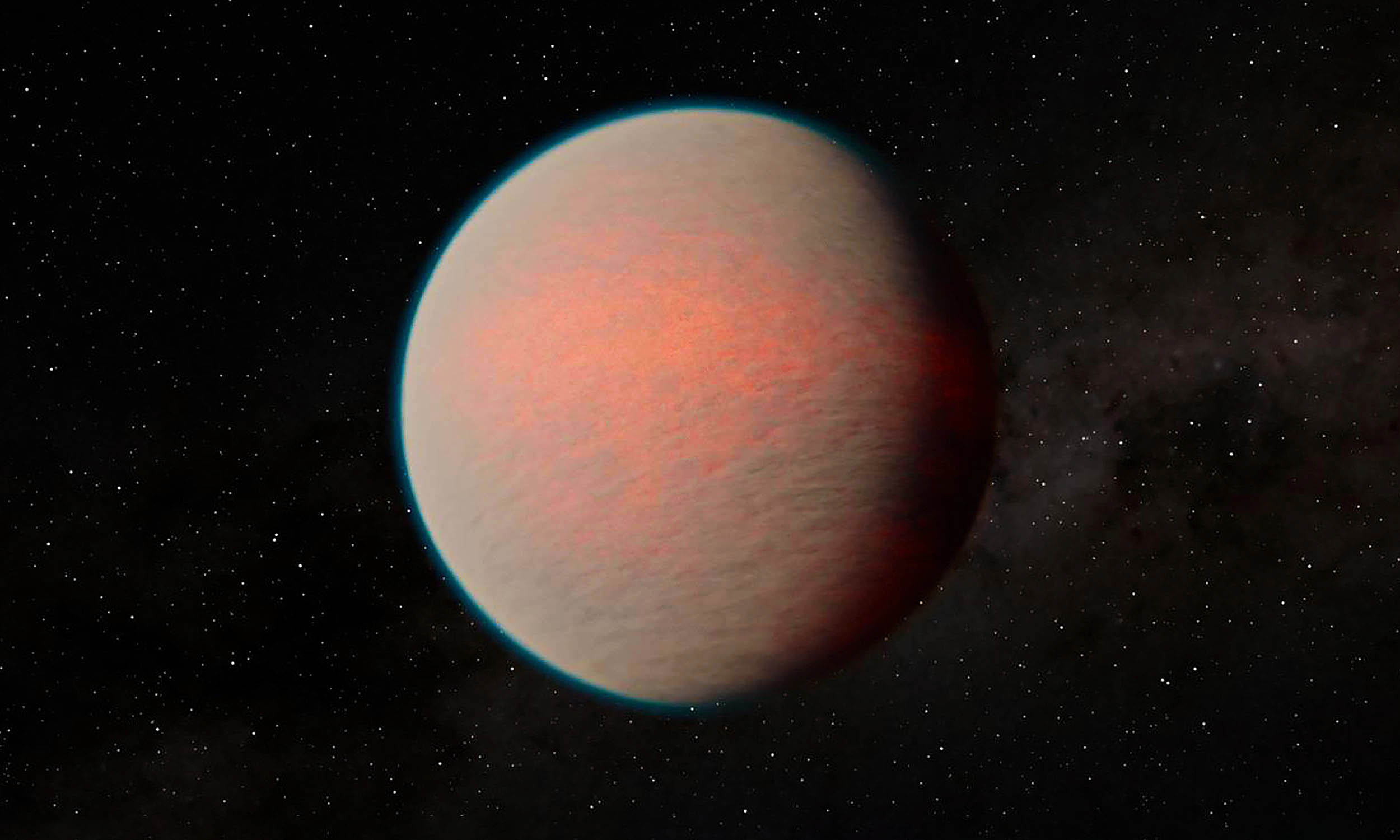
A newly-discovered planet named Enaiposha, GJ 1214 b, is unlike anything found in our own solar system, similar to a "super-Venus"
Astronomers have officially named a distant exoplanet Enaiposha, and it is turning heads across the scientific community for being unlike any world found within our own solar system. The planet, also catalogued as GJ 1214 b, orbits a red dwarf star roughly 40 light-years from Earth and has been described by researchers as a "super-Venus" — a classification that has no equivalent among our eight familiar planetary neighbors.
Enaiposha is significantly larger and more massive than Earth, yet smaller than the ice giants Uranus and Neptune, placing it in a mysterious category scientists call a "sub-Neptune" or "super-Earth." What makes it particularly unusual is its thick, exotic atmosphere, which astronomers believe may be rich in water vapor and heavy molecules, creating conditions utterly alien to anything we have experienced or previously modeled.
The name Enaiposha comes from the Maa language spoken by the Maasai people of Kenya and Tanzania, meaning a large body of water — a fitting tribute given the planet's suspected water-rich composition. The naming follows international conventions administered by the International Astronomical Union, which encourages culturally diverse and meaningful names for newly characterized worlds.
Detailed observations using the James Webb Space Telescope have played a pivotal role in unlocking Enaiposha's secrets. Webb's infrared instruments peered through the planet's dense atmospheric layers with unprecedented precision, revealing a chemical complexity that earlier telescopes were simply not powerful enough to detect. Scientists say the data collected represents one of the most detailed atmospheric profiles ever assembled for an exoplanet of this size.
The "super-Venus" label stems from the planet's likely runaway greenhouse conditions, high atmospheric pressure, and extreme surface temperatures, drawing comparisons to Venus but on a far grander scale. Unlike Venus, however, Enaiposha's atmosphere appears to contain far heavier compounds, suggesting a formation history and evolutionary path that diverges sharply from anything observed in our cosmic backyard.
Researchers say the discovery and detailed characterization of Enaiposha could reshape our understanding of planetary formation across the galaxy. Planets of this type are thought to be among the most common in the Milky Way, yet they remain deeply enigmatic because our solar system contains no direct analogue to study. Enaiposha now offers scientists a rare and richly detailed case study to work from.
The findings have been published in a peer-reviewed journal and are already prompting new theoretical models about how water-rich atmospheres behave under extreme gravitational and thermal conditions. As Webb continues its mission, astronomers anticipate that Enaiposha will remain one of the most closely studied exoplanets of the decade, with further observations potentially revealing even more surprises about this remarkable and alien world.