Meteor Fireballs Are Surging Across Earth — Is Interstellar Comet 3I/ATLAS to Blame?
In the second half of March 2026, Earth arrived within its closest distance of 54.6 million kilometers from the path of the interstellar…
Is the Recent Surge in Meteor Fireballs on Earth Related to 3I/ATLAS?
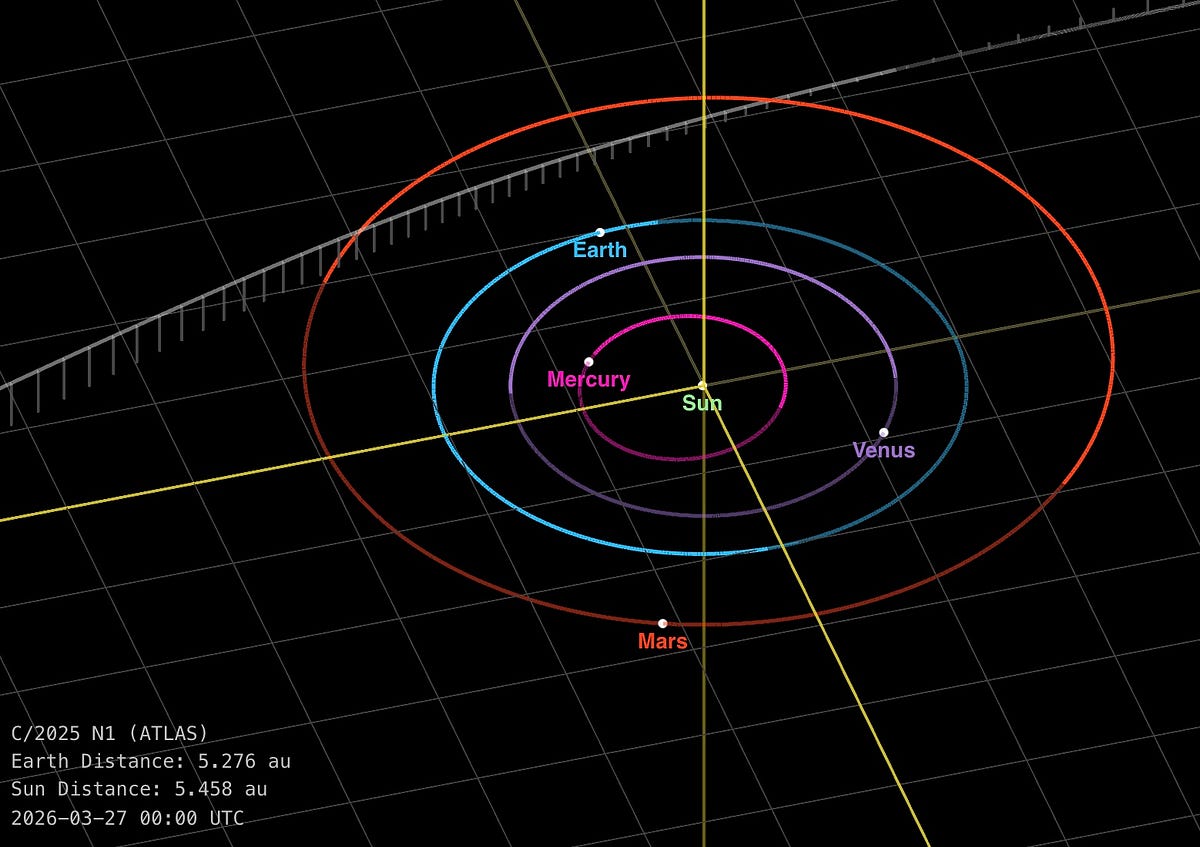
In the second half of March 2026, Earth arrived within its closest distance of 54.6 million kilometers from the path of the interstellar object 3I/ATLAS, and skywatchers around the world began reporting an unusual uptick in bright meteor fireballs streaking across the night sky. The timing has prompted both amateur astronomers and professional researchers to ask whether these spectacular displays could be connected to debris shed by the third known interstellar visitor to pass through our solar system. Reports compiled by the American Meteor Society and international monitoring networks indicate that fireball sightings in the final two weeks of March were significantly above the seasonal average, drawing widespread public attention and speculation on social media.
Scientists studying 3I/ATLAS have noted that cometary objects, particularly those on hyperbolic trajectories from beyond the solar system, can release streams of dust and small particles as they are heated by the Sun. If 3I/ATLAS shed material along its orbital path, it is theoretically possible that Earth could encounter some of that debris as it passes near the object's trajectory. However, researchers caution that 54.6 million kilometers is still a vast distance, and the mechanics of how interstellar debris might disperse and intersect with Earth's orbit remain poorly understood. Several teams at NASA's Jet Propulsion Laboratory and the European Space Agency have begun analyzing the composition of recently recovered meteorite fragments to determine whether they carry isotopic signatures distinct from typical solar system material.
Skeptics within the planetary science community have offered alternative explanations for the fireball surge. Seasonal variations in meteor activity, increased atmospheric monitoring capabilities, and heightened public awareness following media coverage of 3I/ATLAS could all contribute to the perception of an unusual spike. Dr. Elena Vasquez, a meteor specialist at the University of Arizona, noted that March historically overlaps with several minor meteor showers and that reporting biases can amplify what might otherwise be a modest statistical fluctuation. She emphasized that establishing a definitive causal link between 3I/ATLAS and the fireball activity would require rigorous orbital analysis showing that the meteors originated from the direction of the interstellar object's debris trail.
Regardless of whether a direct connection is ultimately confirmed, the convergence of 3I/ATLAS and the fireball surge has reignited public fascination with interstellar objects and their potential effects on Earth. The event underscores the need for expanded monitoring networks capable of tracking both incoming interstellar visitors and the subtle streams of material they may leave behind. Space agencies worldwide have signaled renewed interest in missions that could one day intercept and sample interstellar debris, turning a moment of cosmic curiosity into a catalyst for deeper exploration of the materials that drift between the stars.