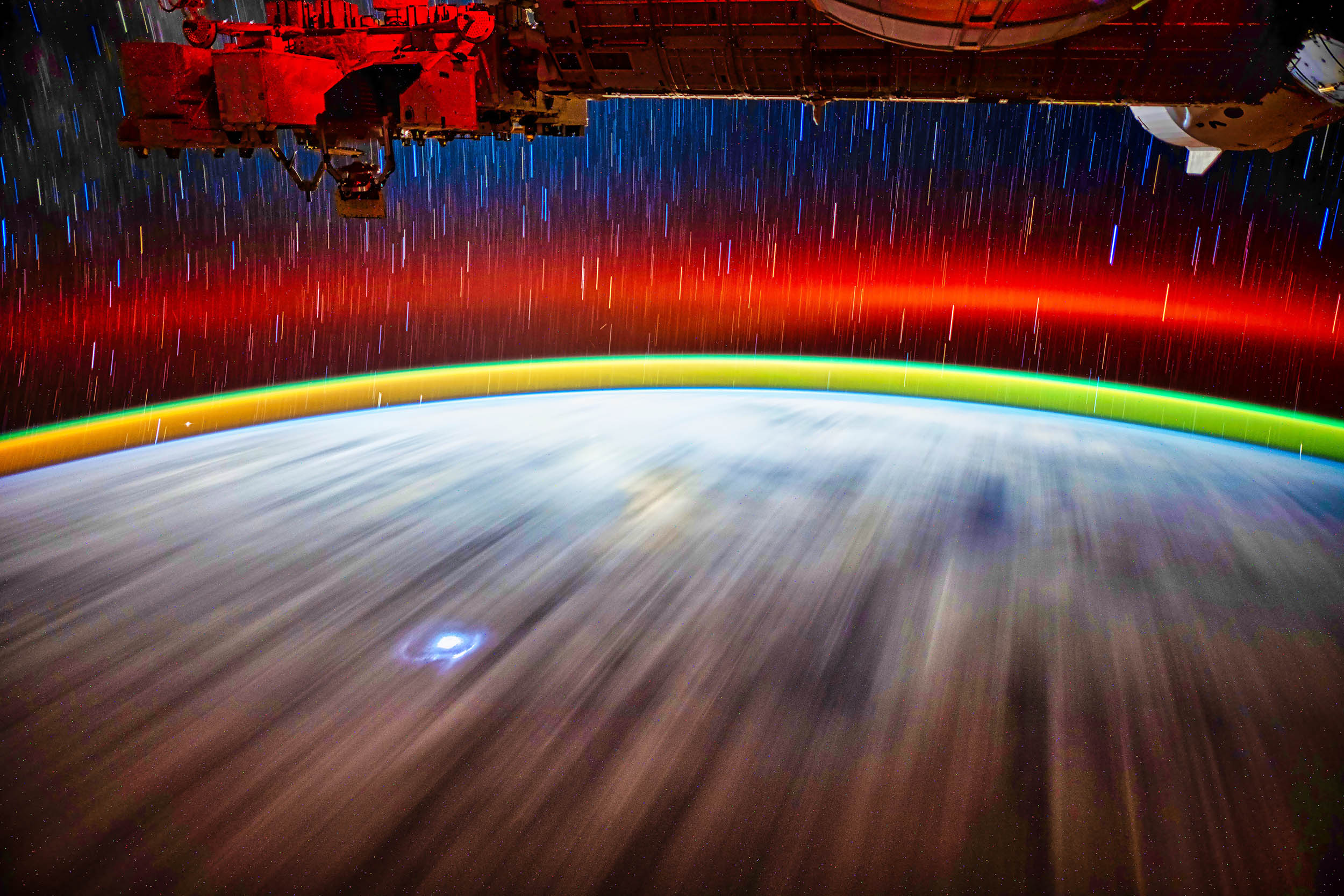
Mystery Phenomenon Spotted 55 Miles Above Earth by ISS Crew
According to NASA, the ISS detected a previously unknown phenomenon surging through Earth's atmosphere, roughly 55 miles above the planet.
International Space Station Observes an Unknown Phenomenon 55 Miles Above Earth
Scientists at NASA are scrambling to understand a mysterious atmospheric event detected by the International Space Station approximately 55 miles above Earth's surface. The phenomenon, which was captured by onboard instruments during a routine monitoring pass, does not match any previously cataloged atmospheric occurrence. Researchers say the detection marks the first time the ISS has recorded an event of this nature, prompting an immediate review of all available data by teams at NASA's Goddard Space Flight Center and the Jet Propulsion Laboratory.
According to preliminary reports, the phenomenon appeared as a rapid surge of energy propagating through the mesosphere, the layer of the atmosphere situated roughly between 31 and 53 miles above sea level, though this event appeared to extend slightly beyond that boundary. Instruments aboard the ISS recorded unusual electromagnetic signatures and thermal fluctuations that lasted for several minutes before dissipating. NASA officials confirmed that the event posed no threat to the crew aboard the station and that all six astronauts currently serving on the ISS remained safe throughout the observation period.
Atmospheric scientists have begun considering several possible explanations, including an unusual interaction between solar radiation and the gases present in the upper atmosphere, or a previously undetected type of electrical discharge similar to sprites or blue jets. However, experts caution that none of the existing models fully account for the readings captured by the station's sensors. Dr. Helen Marsh, a senior atmospheric physicist at NASA, stated that the data is unlike anything her team has encountered in over two decades of monitoring near-space environments.
NASA has announced that it will be coordinating with international space agencies, including the European Space Agency and the Japan Aerospace Exploration Agency, to cross-reference satellite data and determine whether the phenomenon was observed from other vantage points. The agency plans to release a more detailed report in the coming weeks as analysis continues. Scientists around the world have expressed both excitement and curiosity, noting that discoveries of this kind underscore how much remains unknown about the complex systems operating just beyond the edge of our visible sky.