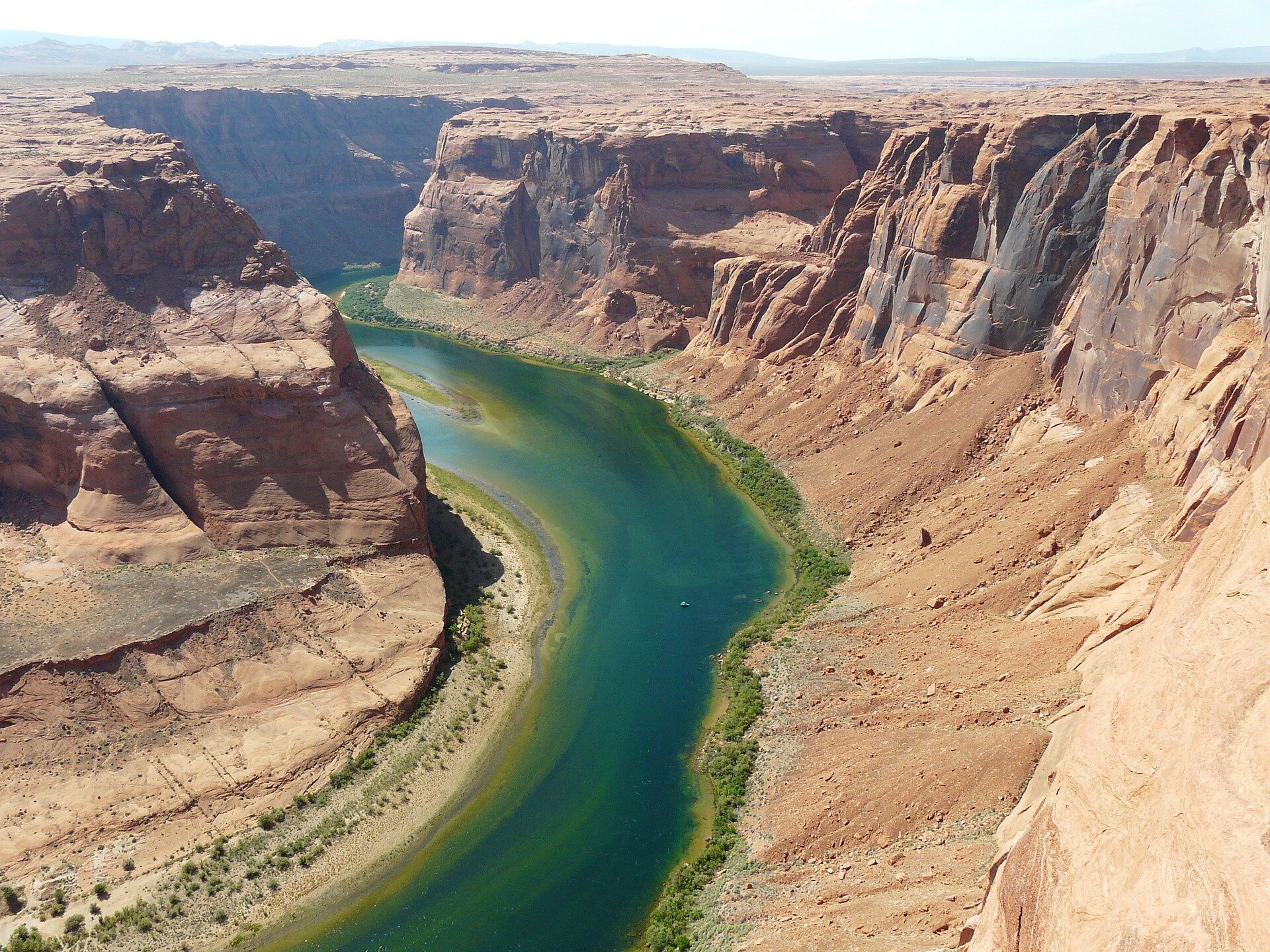
Mystery Solved: The Colorado River Vanished for 5 Million Years — Here's Where It Went
Geologists have solved the mystery of the disappearance from the geological record, millions of years ago, of one of North America's most important waterways: the Colorado River. A paper published in Science shows that the river flowed into an upstream lake o…
Geologists have cracked one of North America's most enduring geological puzzles: why the Colorado River disappeared from the fossil record for roughly 5 million years. A new study published in the journal Science finally provides a compelling answer to the long-standing mystery.
According to the research, the Colorado River did not simply dry up or cease to exist during that ancient gap in the record. Instead, it flowed into a vast upstream lake, effectively trapping its sediment and preventing it from reaching the downstream geological formations where scientists would normally expect to find traces of it.
The findings reshape scientists' understanding of how the American Southwest was formed and how one of the continent's most vital waterways evolved over geological time. The Colorado River today carves through seven U.S. states and two Mexican states, supplying water to tens of millions of people.
The team of geologists pieced together the story using sediment analysis, dating techniques, and regional geological mapping. Their work revealed that a large inland basin captured the river's flow for millions of years, acting as a giant sediment trap that effectively erased the river's downstream signature.
This discovery has significant implications beyond historical geology. Understanding how the Colorado River behaved over millions of years can help scientists model how it might respond to ongoing climate change and the increasing water demands placed on it by a growing population in the arid American West.
The Colorado River is already under severe stress, with water levels at key reservoirs like Lake Mead and Lake Powell having dropped to historic lows in recent years. Researchers say that long-term geological context is an important tool for understanding the river's resilience and vulnerability.
The study represents a major collaboration among geologists and is being hailed as a landmark contribution to the understanding of North American river systems. Scientists say the findings open new avenues of research into how ancient lakes and rivers interacted across the continent during major geological transitions.