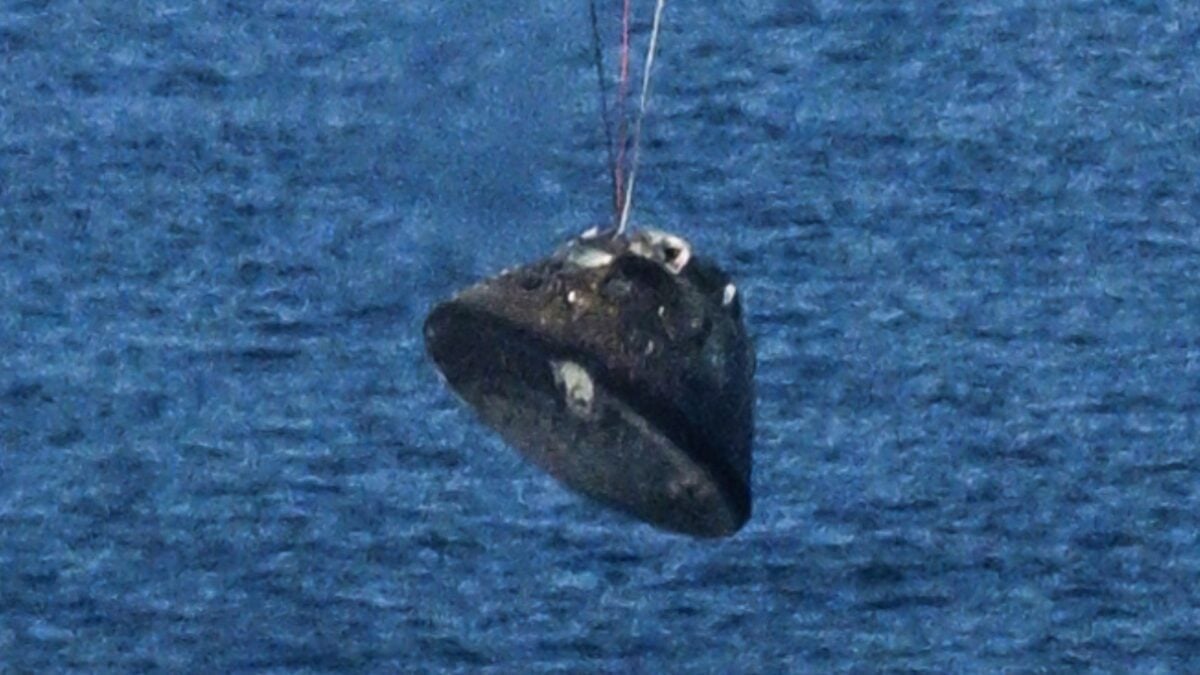
NASA Addresses Viral Claims About Artemis 2 Heat Shield Damage
Social media users were quick to point out what looks like a large piece of missing material from the bottom of the spacecraft.
NASA has moved to clarify widespread speculation on social media after images circulating online appeared to show a large section of missing material from the bottom of the Orion spacecraft's heat shield, intended for use on the Artemis 2 mission.
The images prompted concern among space enthusiasts and critics alike, with many users suggesting the anomaly could pose a serious safety risk to the crew scheduled to fly aboard the spacecraft. Artemis 2 is set to carry four astronauts on a lunar flyby, making it the first crewed mission under NASA's Artemis program.
NASA officials confirmed that the visual irregularity is not indicative of structural failure or missing material, but rather a normal characteristic of the heat shield's design and manufacturing process. The agency stressed that the spacecraft remains on track and that all safety protocols are being rigorously followed.
The Orion heat shield uses an ablative material called Avcoat, which is designed to burn away in a controlled manner during reentry, dissipating the intense heat generated as the capsule plunges back into Earth's atmosphere. Variations in the surface appearance of this material are expected and do not compromise its performance.
NASA pointed to a similar situation following the Artemis 1 uncrewed test flight in 2022, when engineers observed unexpected charring patterns on the heat shield. That discovery prompted additional analysis and design reviews, some of which have informed preparations for the crewed follow-up mission.
The agency emphasized its commitment to transparency, noting that engineers continue to evaluate heat shield performance data and that no issues have been identified that would delay the Artemis 2 launch timeline. The mission is currently targeted for launch in 2026.
Space analysts have welcomed NASA's swift response to the social media speculation, though some independent experts are calling for greater public disclosure of heat shield inspection data to help rebuild confidence following the concerns raised after Artemis 1.