NASA's Curiosity Rover Develops Growing Hole in Mars Wheel
It desperately needs a Martian pit stop.
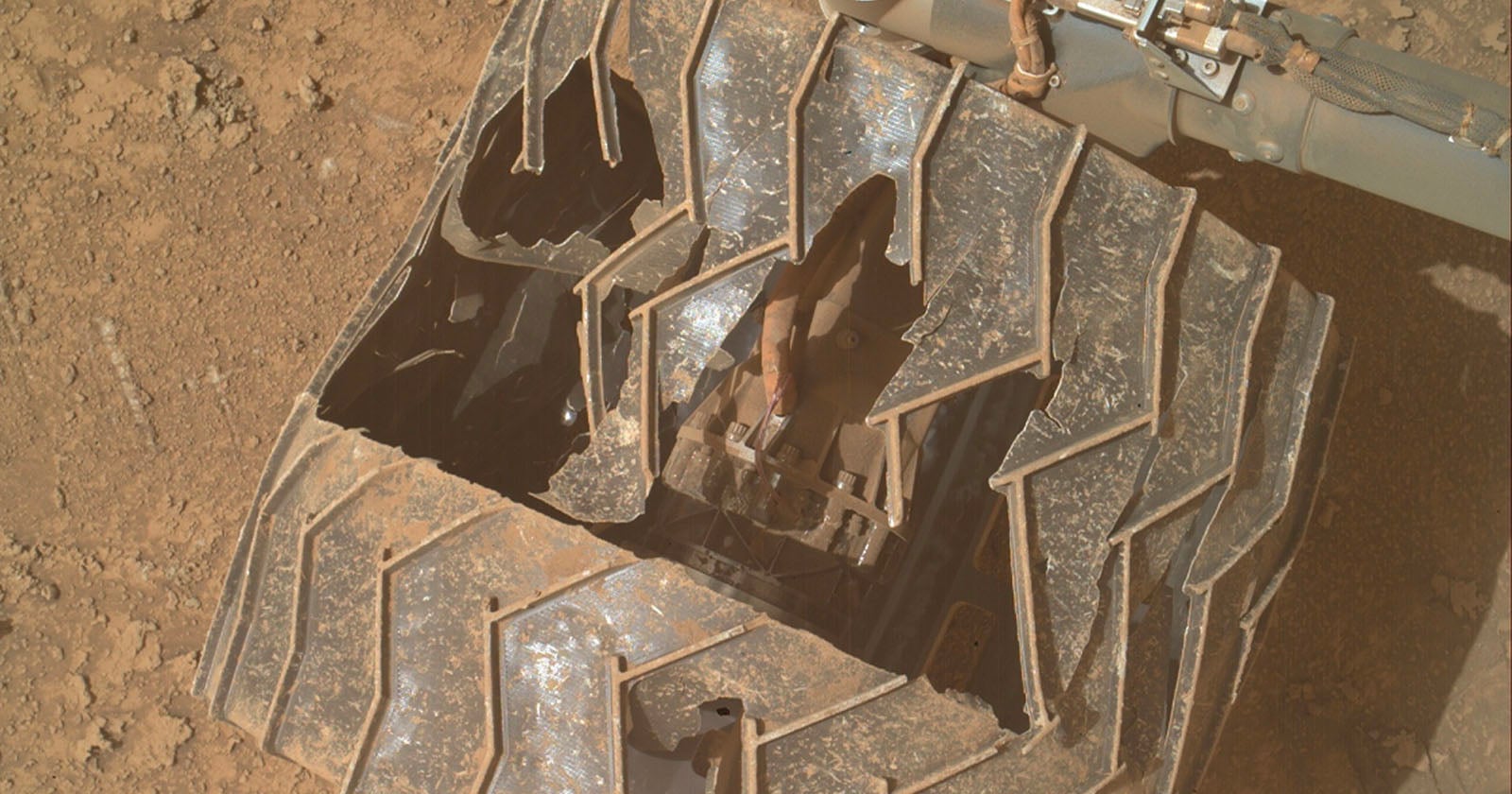
There's an Even Larger Hole in the Wheel of NASA's Mars Curiosity Rover
NASA's Mars Curiosity rover has been tirelessly exploring the Red Planet since its dramatic landing in August 2012, but more than a decade of traversing harsh Martian terrain has taken a serious toll on its aluminum wheels. Recent images captured by the rover's Mars Hand Lens Imager reveal that one of its six wheels now sports an even larger hole than previously documented, raising fresh concerns about the vehicle's long-term mobility. The damage is a stark reminder that even the most sophisticated engineering has its limits when faced with the relentless punishment of sharp Martian rocks.
The wheel damage is not a new issue for mission controllers at NASA's Jet Propulsion Laboratory in Pasadena, California. Engineers first noticed significant wear and tear on Curiosity's thin aluminum wheels as early as 2013, when jagged punctures and dents began appearing at an alarming rate. Since then, the team has implemented a series of driving strategies to minimize further damage, including selecting smoother routes, driving backward over particularly rough terrain, and developing a traction control algorithm that adjusts the rover's speed and wheel movements to reduce stress on the most vulnerable areas.
Despite these precautions, the cumulative effect of traveling more than 20 miles across Gale Crater has continued to grind away at the wheels. The latest images show that existing tears in the wheel skin have expanded considerably, with sections of the thin aluminum treads breaking away entirely. Engineers say the wheels were designed with a built-in margin of degradation and that the structural integrity of the interior wheel structure remains sound for now. However, each new hole brings the rover one step closer to a threshold that could eventually compromise its ability to drive safely across the Martian surface.
NASA officials have emphasized that Curiosity remains fully operational and continues to deliver groundbreaking science from its ongoing exploration of Mount Sharp. The rover's mission has already far exceeded its original two-year planned duration, and engineers remain confident they can manage the wheel damage for the foreseeable future through careful route planning and conservative driving techniques. Still, the growing holes serve as a poignant symbol of Curiosity's age and the extraordinary challenges of operating a robot on another planet, millions of miles from the nearest repair shop. If ever a spacecraft desperately needed a Martian pit stop, it would be this one.