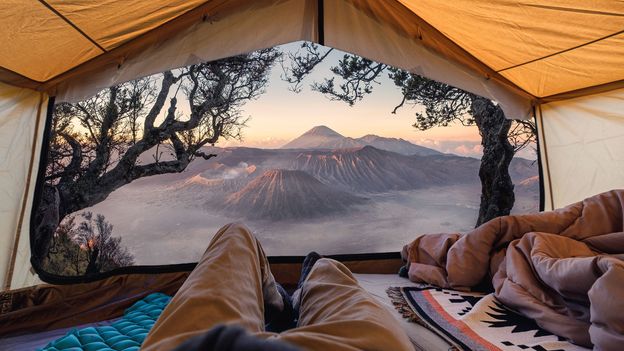
Science Says Camping Could Be the Sleep Cure You've Been Looking For
No beds, more birdsong: why outdoor sleep can make for better slumber which continues after you return home.
If you've been struggling to get a good night's rest, the solution may not be a new mattress or a white noise machine — it could be a tent and a sleeping bag. Research increasingly suggests that spending time camping in the great outdoors can dramatically improve sleep quality, both during the trip and in the weeks that follow.
The key lies in our relationship with natural light. Modern life exposes us to artificial lighting well into the night, disrupting the body's circadian rhythm — the internal clock that tells us when to feel sleepy and when to wake. When we camp, we are exposed to natural sunrise and sunset cycles, which help reset this biological clock and encourage the production of melatonin at the appropriate time.
Studies have shown that even a single weekend of camping can shift a person's sleep timing earlier, helping them fall asleep more quickly and wake feeling more refreshed. More impressively, these benefits do not disappear the moment you pack up the tent — researchers have found that improved sleep patterns can persist for days or even weeks after returning to everyday life.
Beyond light exposure, camping removes many of the common obstacles to quality sleep. Screens, work emails, social media, and the general noise of urban life all compete for our attention at bedtime. In the wilderness, those distractions are replaced by birdsong, rustling leaves, and the natural rhythms of the environment — a far more conducive backdrop for winding down.
Physical activity also plays a role. Camping typically involves hiking, swimming, or simply walking across uneven terrain, all of which increase physical tiredness in a healthy way. This natural fatigue, combined with cleaner air and reduced stress, creates ideal conditions for deep, restorative sleep.
Experts recommend that even short camping trips of two to three nights can yield measurable improvements. For those who cannot get away frequently, incorporating elements of the camping experience at home — such as limiting screen time after dark, spending more time outdoors during the day, and sleeping with the window open — can offer some of the same benefits.
So the next time you find yourself staring at the ceiling at 2 a.m., it may be worth trading the bedroom for a bivouac. Your body's internal clock might just thank you for it.