Scientists Achieve Real-Time Imaging of Oxygen Spillover at Catalyst Interfaces
In situ microscopic single-particle imaging demonstrates the significance of rationally engineered metal–support interfaces for activating the oxygen in bulk catalyst, helping elucidate reaction pathways in catalytic conversions.
Researchers have achieved a breakthrough in catalysis science by using in situ microscopic single-particle imaging to directly observe oxygen spillover across metal–support interfaces in bulk catalysts, opening new avenues for the design of more efficient chemical conversion processes.
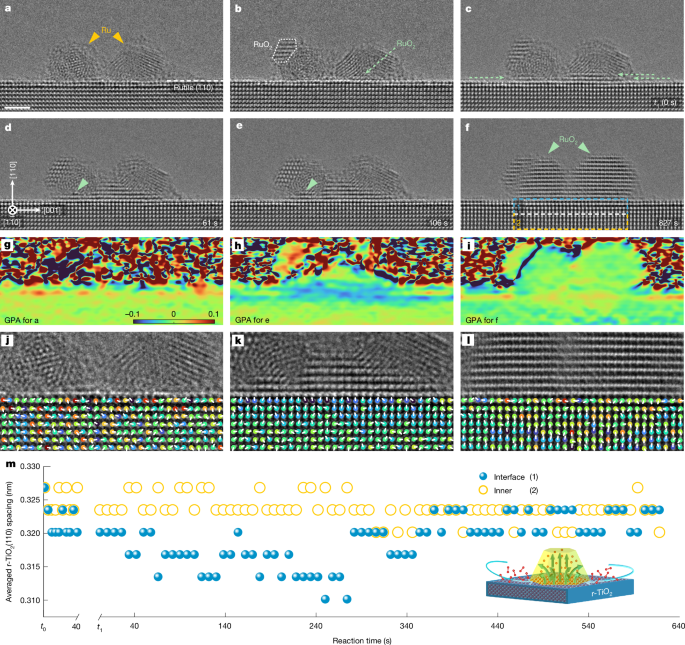
The study demonstrates that carefully engineered interfaces between metal particles and their supporting materials play a decisive role in activating oxygen stored within the bulk of a catalyst. This oxygen, previously considered largely inaccessible during reactions, can be mobilized when the interface geometry and composition are precisely controlled.
Using advanced real-time imaging techniques at the single-particle level, the research team was able to track how oxygen migrates from the interior of catalyst particles to active surface sites. The visualization provides unprecedented clarity on a phenomenon that has long been hypothesized but difficult to confirm experimentally.
The findings shed new light on reaction pathways in catalytic conversions, including oxidation reactions critical to industrial chemical manufacturing and environmental remediation technologies such as vehicle emissions control and air purification systems.
By elucidating how bulk oxygen is released and transported through the catalyst structure, the research offers a rational framework for designing next-generation catalysts with enhanced activity and selectivity. Engineers can now target specific interface configurations to maximize the utilization of oxygen reservoirs within catalyst materials.
The work represents a significant step forward in bridging the gap between atomic-scale surface science and practical catalytic performance, with implications for energy conversion, pollution control, and the broader field of heterogeneous catalysis.