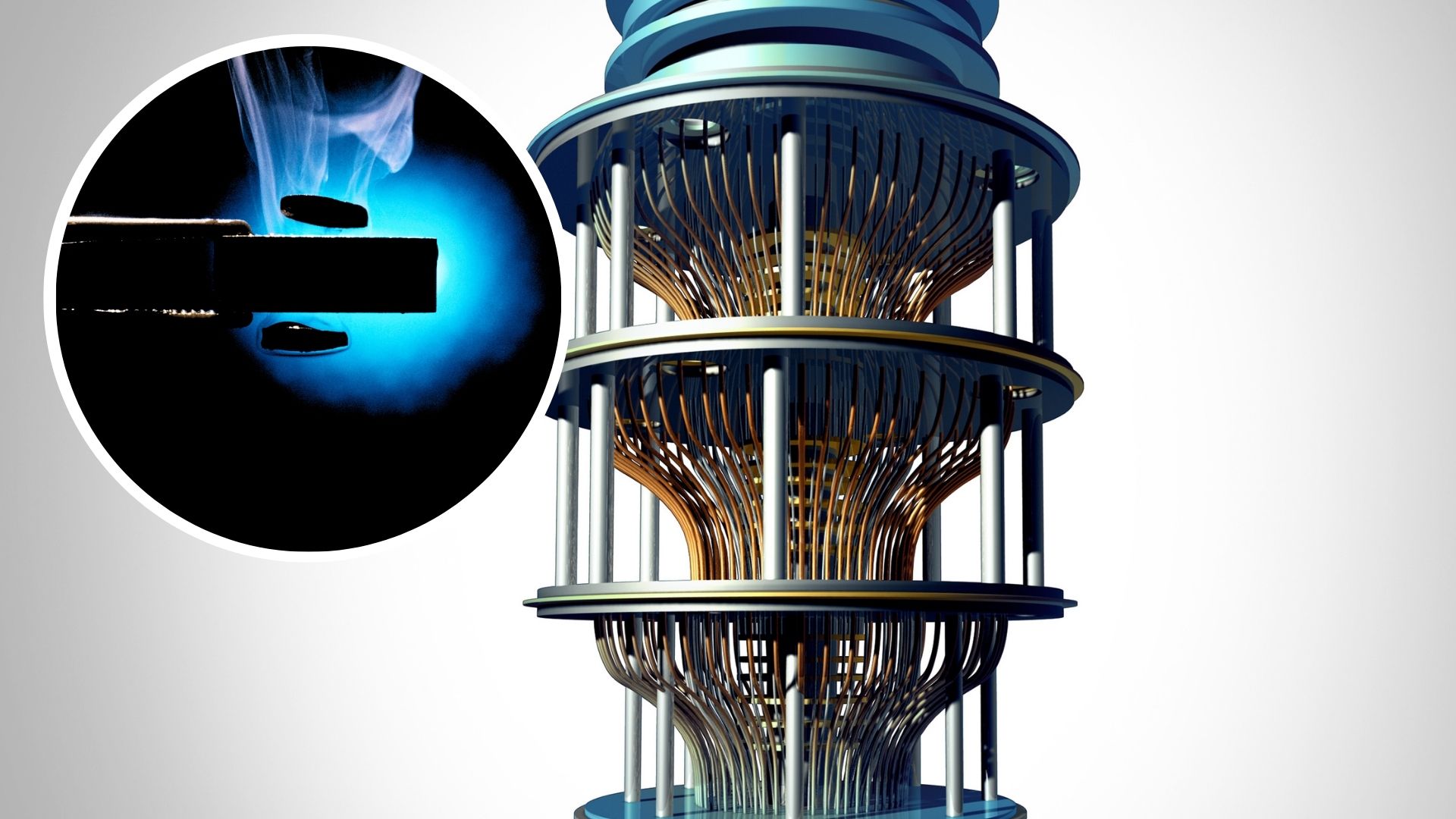
Scientists Crack the Code Behind High-Temperature Superconductors
Researchers have discovered how tiny changes in superhydride structure enable superconductivity at near room temperatures but extreme pressure — offering clues for designing more practical superconductors.
American researchers have made a major breakthrough in understanding how certain materials achieve superconductivity at near room temperatures, a discovery that could reshape the future of energy transmission and electronics.
The study focused on superhydrides — hydrogen-rich compounds that have emerged as leading candidates for high-temperature superconductivity. Scientists found that tiny structural changes within these materials play a decisive role in enabling the phenomenon, which allows electricity to flow with zero resistance.
The catch, however, is that these superhydrides currently require extreme pressures — millions of times greater than atmospheric pressure — to function. This has limited their practical application despite the remarkable temperatures at which superconductivity occurs.
By mapping precisely how atomic-level structural variations influence superconducting behavior, the team has provided a clearer roadmap for designing next-generation materials that could work under far less demanding conditions.
Superconductivity has long been considered one of physics' most coveted frontiers. Materials that conduct electricity without energy loss could revolutionize power grids, magnetic levitation systems, and medical imaging equipment such as MRI machines.
The researchers believe their findings open new avenues for synthesizing superhydrides with tuned structures, potentially bringing ambient-pressure, room-temperature superconductors — once thought to be science fiction — closer to reality.
Experts in the field have praised the work as a significant step forward, noting that understanding the microscopic mechanisms behind superconductivity is essential before practical devices can be built. Further experimental and computational studies are expected to follow.