Scientists Discover Two Exoplanets Forming a Mirror Image of Our Solar System
"WISPIT 2 is the best look into our own past that we have to date."
Scientists Discover Mirror of Our Solar System in 2 Exoplanets Forming Around a Star
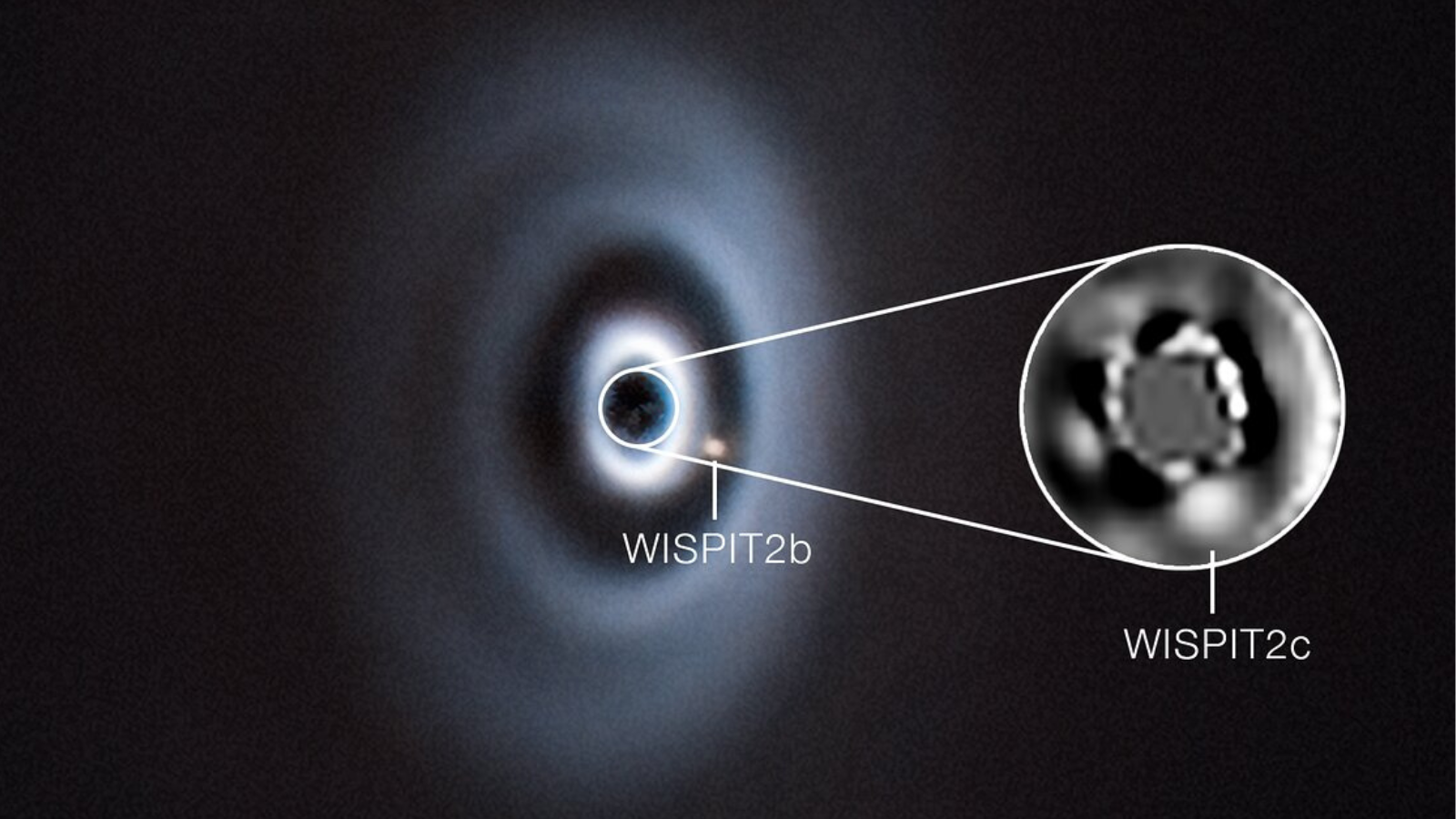
In a groundbreaking discovery that has sent waves of excitement through the astronomical community, scientists have identified two exoplanets in the early stages of formation around a distant star that bear a striking resemblance to the conditions that shaped our own solar system billions of years ago. The star system, designated WISPIT 2, was observed using a combination of advanced ground-based telescopes and space-based instruments, revealing a protoplanetary disk with two distinct planetary bodies coalescing from dust and gas. Researchers say the finding offers an unprecedented window into the processes that likely gave rise to Earth and its neighboring planets roughly 4.6 billion years ago.
The two forming exoplanets appear to occupy orbital positions remarkably similar to where Jupiter and Saturn sit in our solar system, and their masses are tracking along development paths consistent with gas giant formation. Scientists believe that the presence of these two bodies at such familiar distances from their host star could eventually shape the inner regions of the system in ways that mirror how our own rocky planets came to exist. The host star itself is a young, sun-like star estimated to be only a few million years old, making it an ideal candidate for studying the earliest chapters of planetary development.
"WISPIT 2 is the best look into our own past that we have to date," said Dr. Elena Marchetti, the lead researcher on the project and an astrophysicist at the European Southern Observatory. She explained that while scientists have long theorized about the formation mechanisms of our solar system, direct observational evidence has remained elusive. The WISPIT 2 system provides a real-time laboratory where those theories can finally be tested against observable phenomena, potentially confirming or challenging long-held assumptions about how planets are born and evolve over millions of years.
The research team plans to continue monitoring the WISPIT 2 system over the coming years, hoping to track the growth and migration of the two exoplanets as they mature. Future observations with next-generation instruments, including the James Webb Space Telescope and upcoming extremely large telescopes, are expected to reveal even finer details about the system's composition and dynamics. Scientists say that understanding how this mirror solar system develops could not only illuminate our own origins but also help refine the search for other Earth-like worlds capable of supporting life elsewhere in the galaxy.