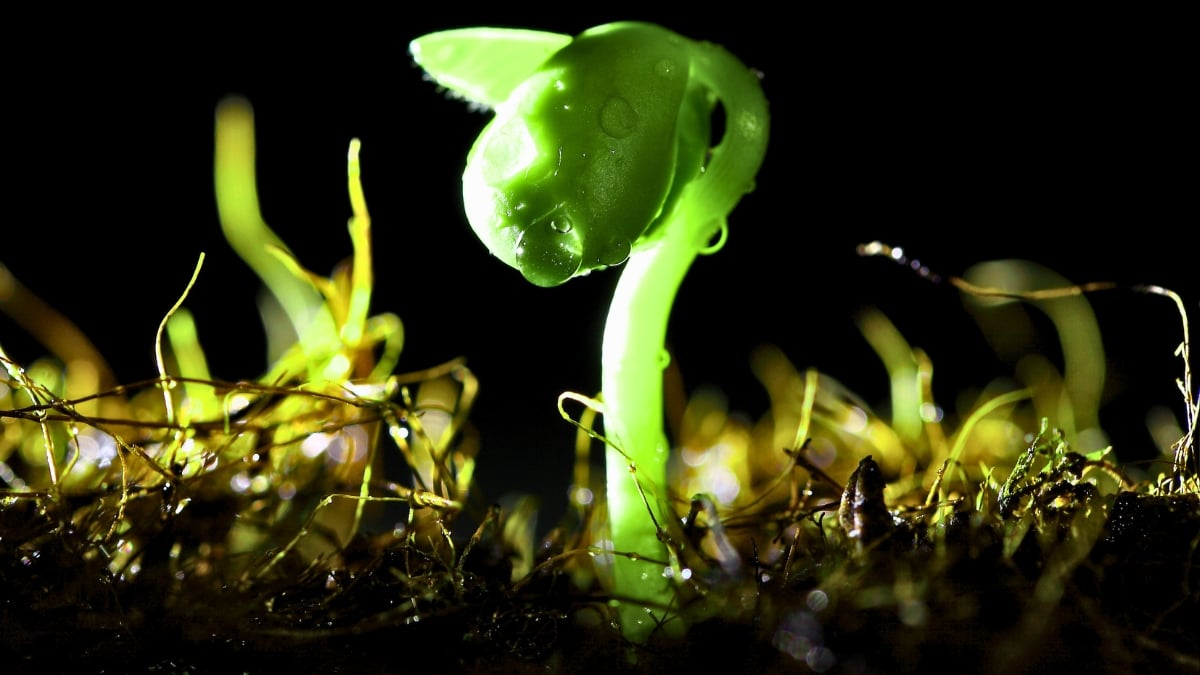
Soil Bacteria and Fungi May Trigger Rainfall, Groundbreaking Study Finds
Tiny organisms on the ground – bacteria and fungi – have a "superpower" that allows them to reach up into the atmosphere and pull down the rain, according to a recent study.
Scientists have discovered that microscopic organisms living in soil — including bacteria and fungi — may possess a remarkable ability to influence weather patterns by triggering rainfall from the atmosphere, according to a newly published study.
The research suggests that these tiny microbes act as biological cloud seeders, releasing particles that travel upward into the atmosphere and interact with water vapor to encourage the formation of rain droplets. Researchers are describing this ability as a kind of natural 'superpower' hiding just beneath our feet.
The process works through a mechanism known as bioprecipitation, in which microorganisms release aerosol particles that serve as ice nuclei. These nuclei allow water vapor in clouds to condense and freeze, eventually falling back to earth as precipitation. While the concept of bioprecipitation is not entirely new, the extent to which soil-dwelling organisms contribute to it has surprised researchers.
The study highlights bacteria from the genus Pseudomonas and various fungal spore-producing species as particularly effective at this process. Both are extraordinarily common in agricultural and forest soils around the world, suggesting the phenomenon could be widespread and globally significant.
Scientists believe the findings could have major implications for our understanding of the Earth's water cycle and climate systems. If microbes play a meaningful role in regulating rainfall, disruptions to soil ecosystems through deforestation, urbanization, or industrial farming could have unintended consequences on regional precipitation patterns.
The research also opens up potential new avenues for addressing droughts and water scarcity. Experts suggest that, in the future, it may be possible to harness or enhance microbial cloud-seeding activity to encourage rainfall in regions struggling with dry conditions, offering a biological alternative to chemical cloud seeding methods currently in use.
Researchers caution that further studies are needed to fully map the relationship between soil microbial communities and rainfall, and to determine how human activity may be altering these natural processes. The findings, however, underscore just how deeply interconnected life on the ground is with the skies above.