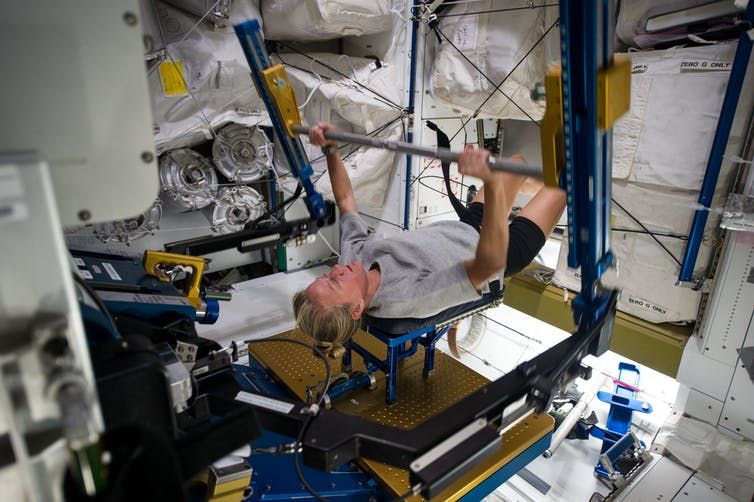
Space Travel Rewires the Brain, Leaving Astronauts With Lasting Grip Strength Deficits
It turns out that living in space can have a lasting impact on how your brain works, researchers have found.
Scientists have discovered that living in space has a profound and lasting effect on the human brain, with astronauts returning to Earth experiencing significant challenges with grip strength — a finding that highlights the complex neurological toll of spaceflight.
Researchers found that the brain's motor control systems are altered during missions in microgravity, leading to measurable deficits in how astronauts grip and handle objects both while in orbit and after they return home. The changes appear to stem from the way the brain adapts to the weightless environment of space, essentially relearning how to coordinate movement without the constant pull of gravity.
The study underscores a growing body of evidence suggesting that the physical challenges of space travel extend well beyond muscle atrophy and bone density loss. Neurological adaptations, while sometimes useful in orbit, can become a liability the moment an astronaut sets foot back on solid ground.
Scientists measured grip strength and motor function in astronauts before, during, and after missions, finding that recovery could take weeks or even months. In some cases, the brain's rewiring during spaceflight meant that everyday tasks requiring fine motor control were unexpectedly difficult upon return to Earth.
These findings carry significant implications for the future of long-duration spaceflight, including planned missions to the Moon and Mars. If astronauts arrive at a destination after months in microgravity with compromised grip strength and motor function, their ability to perform critical tasks could be seriously undermined.
Researchers are now calling for the development of targeted countermeasures, including specialized exercises and cognitive training programs, to help protect astronauts' neurological health during extended missions. Understanding the brain's adaptability in space, they argue, is just as vital as addressing its physical demands.