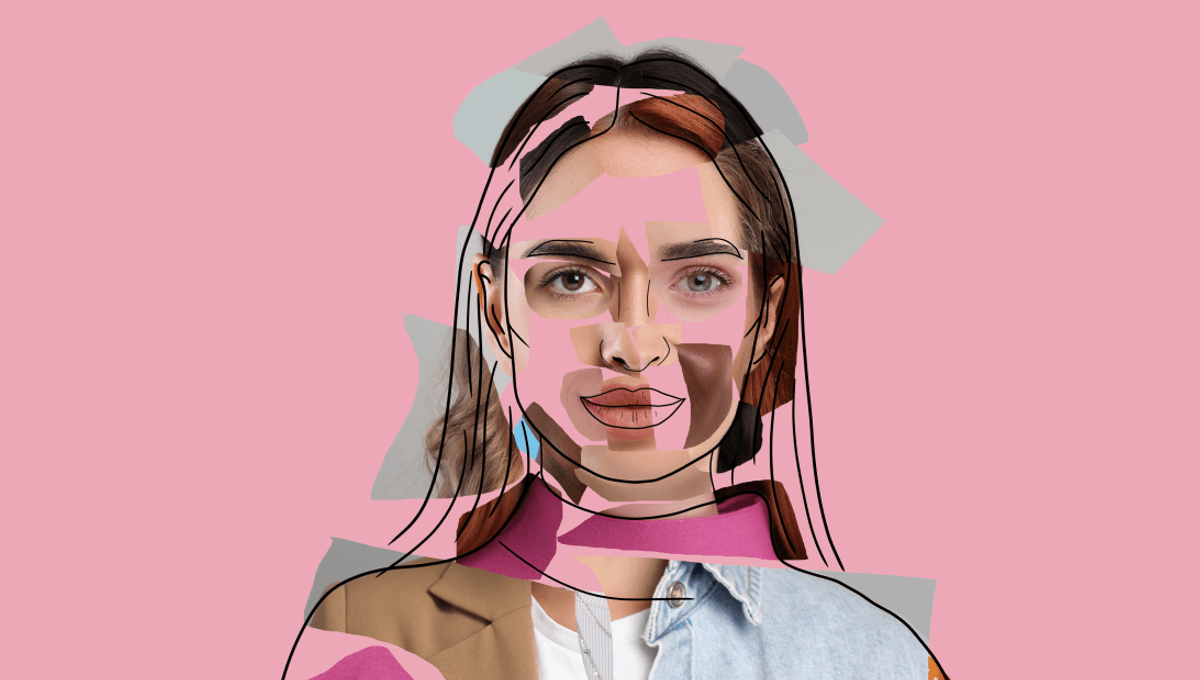
The Evolutionary Advantage of Standing Out: Why Human Faces Are Uniquely Diverse Among Primates
In an age of filters washing us into uniformity, dare to have a little something something.
Why Are Human Faces So Diverse Compared To Other Primates? Because Being Unique Was Critical To Our Evolution
Human faces are remarkably diverse compared to those of our closest primate relatives, and scientists say this is no accident. Research published in Nature Communications has shown that the genes controlling human facial structure are far more variable than those governing other body parts, suggesting that evolutionary pressures actively favored people who looked distinct from one another. While a troop of macaques might look nearly identical to the untrained eye, humans evolved in social environments where being instantly recognizable was a matter of survival. The ability to tell friend from foe, kin from stranger, and mate from rival depended on each face telling a unique story.
The study, led by researchers at the University of California, Berkeley, analyzed genetic data alongside detailed facial measurements and found that the regions of the human genome associated with facial features showed signs of having been shaped by frequency-dependent selection. In simple terms, the rarer your face, the more advantageous it was. Individuals who were easily identifiable could build stronger social bonds, establish trust, and navigate the complex webs of cooperation and competition that defined early human communities. This created an evolutionary arms race of uniqueness, pushing our species toward the extraordinary facial diversity we see today.
Other primates, by contrast, rely more heavily on vocalizations, body posture, and scent to identify one another within their groups. Humans, with their intricate social hierarchies and dependence on visual communication, needed faces that functioned almost like biological name tags. Our flat facial profiles, expressive musculature, and wide variation in features like nose shape, eye spacing, and jawline all serve this purpose. Evolution, it turns out, was the original advocate for standing out in a crowd.
In an era when social media filters and cosmetic trends increasingly push faces toward a single homogenized ideal, the science offers a compelling counterargument. Our diversity is not a flaw to be smoothed away but a defining feature of what makes us human. Every bump, asymmetry, and quirky proportion carries the fingerprint of thousands of generations of natural selection working to ensure that no two faces are quite the same. So in a world that keeps trying to make everyone look alike, dare to have a little something something. Evolution spent millennia making sure you would.