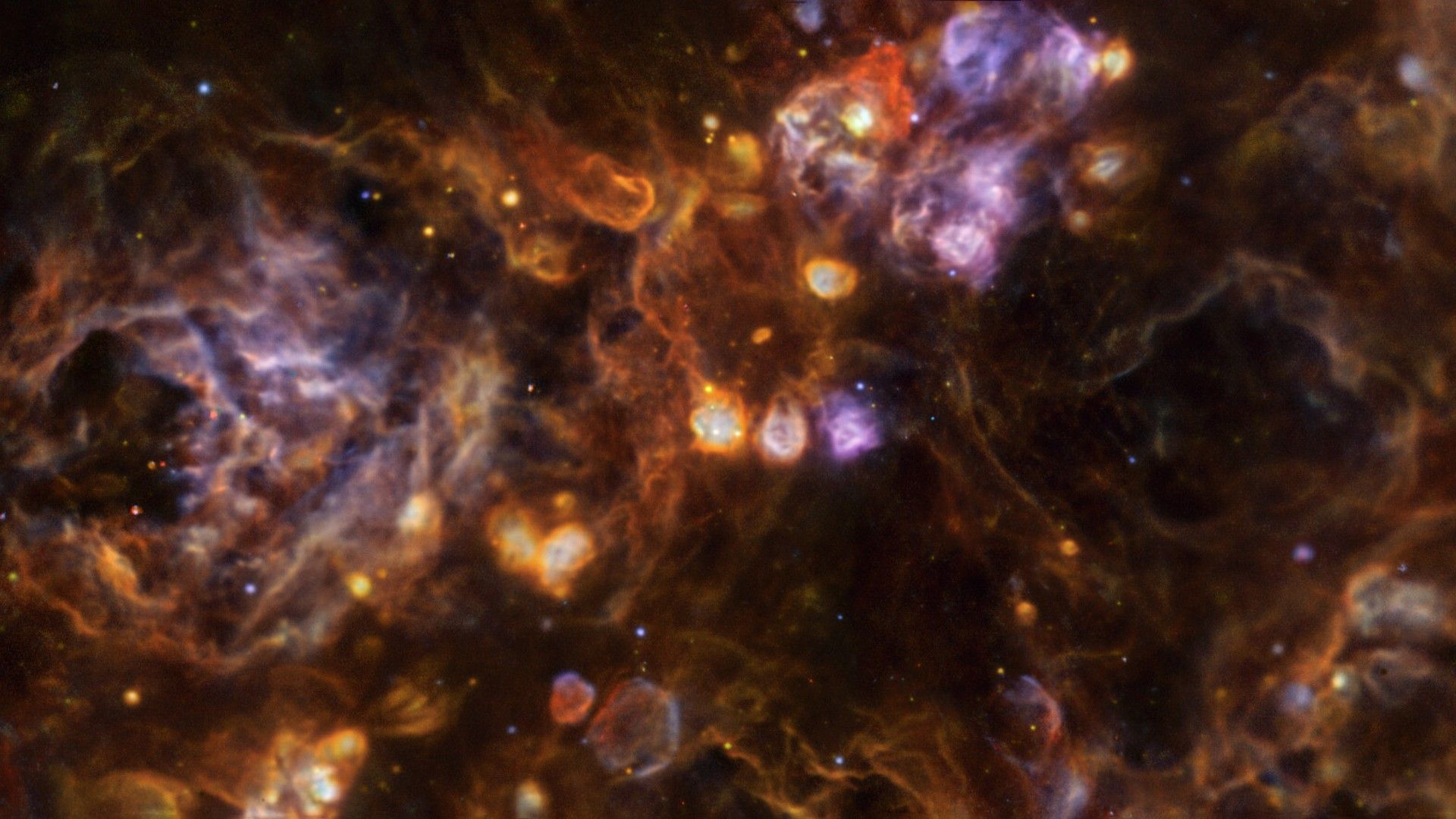
Triangulum Galaxy Blazes With Color in Stunning New Image
"This cosmic interplay produces a spectacular and dynamic landscape, revealing that the birthplaces of stars are far more beautiful and complex than we ever imagined."
Triangulum Galaxy dazzles in psychedelic color photo of the day for March 23, 2026
The Triangulum Galaxy, also known as Messier 33, has taken center stage as the astronomy photo of the day for March 23, 2026, captivating viewers around the world with a breathtaking image that transforms the familiar spiral galaxy into a riot of psychedelic color. The stunning photograph, processed using advanced narrowband imaging techniques, reveals intricate details of the galaxy's structure that are invisible to the naked eye, highlighting vast regions of ionized gas, dust lanes, and stellar nurseries in vivid hues of magenta, turquoise, and gold. Located approximately 2.73 million light-years from Earth in the constellation Triangulum, this galactic neighbor is the third-largest member of our Local Group of galaxies.
The image was captured over dozens of hours of combined exposure time using specialized filters that isolate light emitted by specific chemical elements, including hydrogen-alpha, oxygen III, and sulfur II. By assigning different colors to each of these emission wavelengths and combining them into a single composite, the photographer was able to produce an image that maps the chemical composition of the galaxy's star-forming regions in extraordinary detail. The result is a psychedelic tapestry that reveals the complex interplay between hot young stars and the surrounding interstellar medium.
Astronomers and astrophotographers alike have praised the image for its scientific value as well as its artistic beauty. The photograph draws particular attention to NGC 604, one of the largest known star-forming regions in the Local Group, which appears as a brilliant knot of glowing gas in the galaxy's spiral arms. "This cosmic interplay produces a spectacular and dynamic landscape, revealing that the birthplaces of stars are far more beautiful and complex than we ever imagined," noted one expert commenting on the extraordinary level of detail captured in the image.
The Triangulum Galaxy has long been a favorite target for both amateur and professional astronomers due to its relatively close proximity and its nearly face-on orientation, which provides an unobstructed view of its spiral structure. As imaging technology and processing techniques continue to advance, photographs like this one remind us that even well-studied objects in the night sky can still surprise and inspire. The image has already been widely shared across social media platforms and astronomy forums, drawing thousands of comments from enthusiasts who say it has renewed their sense of wonder about the universe.