 eChowder
My Grandmother's Sunday Gravy, and Why I Stopped Changing It
Jump to Recipe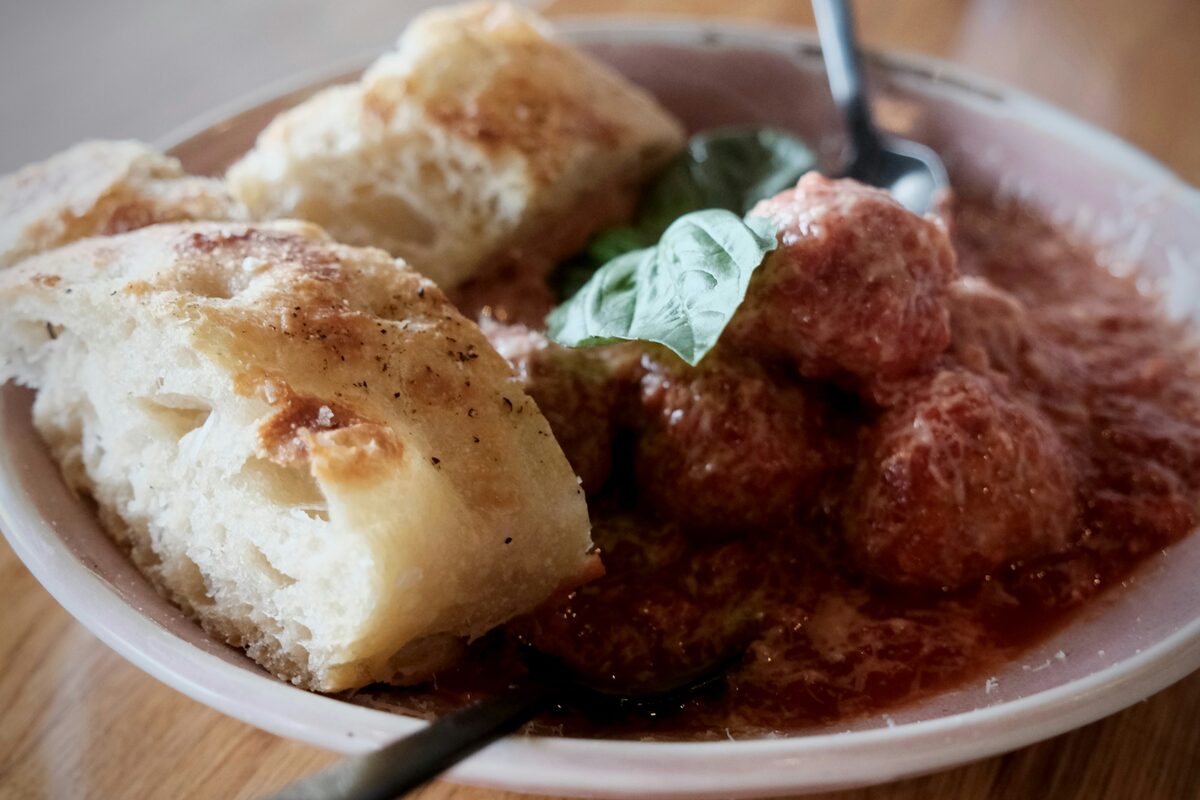
For about six years, I made a quieter, "better" version of my grandmother's Sunday gravy. I added fennel seed to the meatballs because I'd read it balanced the richness. I used San Marzano tomatoes specifically instead of whatever cans were on sale, because I'd convinced myself the difference was significant enough to matter. I cut the simmer time down by an hour because a food blog told me tomatoes turn bitter if you cook them too long. Every change was small, defensible, and in isolation, probably even an improvement.
My grandmother made this gravy every single Sunday for over forty years, in the same dented pot, using whatever canned tomatoes happened to be in her cart that week. She never measured anything. She never wrote it down. When I finally asked her to walk me through it, step by step, so I could write it down for the first time, she looked at me like I'd asked her to explain how to breathe.
It took my own kids asking why "Grandma's gravy" tasted different at my house before I really sat with what I'd been doing. I hadn't improved the recipe. I'd replaced it with a different, nearby recipe that happened to use the same name.
What actually makes it hers, and not just "a" Sunday gravy
It's not a secret ingredient. It's the order of operations and the patience, both of which are easy to shortcut and both of which are where almost all the flavor actually lives. She browned the meat hard, in batches, never crowding the pot, because crowding steams the meat instead of browning it and you lose that entire layer of flavor before the sauce even starts. She let the tomato paste cook in the fat for a few real minutes until it darkened, not just warmed through, because that's where a surprising amount of depth comes from.
The meatballs go in last, not first
This was the detail I'd been getting wrong for years without realizing it mattered. I used to brown the meatballs and add them early, assuming more simmer time made them better. She added them in the last forty-five minutes, after the pork and beef chuck had already broken down the sauce for over two hours. Meatballs that simmer the whole time turn dense and a little dry by the end; added late, they stay tender and just barely hold together when you cut into them.
Three meats, not one
Pork shoulder, beef chuck, and the meatballs each contribute something different — the pork renders a sweetness into the sauce as it breaks down, the beef chuck adds body and a deeper savoriness, and the meatballs carry the garlic and cheese flavor that ties the whole pot together. Leave any one of the three out and the sauce tastes thinner, less layered, in a way that's hard to name until you taste the real version side by side.
Why I stopped "improving" it
The fennel seed wasn't wrong, exactly. It just wasn't this recipe. What I eventually understood is that a family recipe like this one isn't really a set of instructions for the best possible version of a tomato sauce — it's a specific, fixed memory that a lot of people are quietly relying on tasting exactly the same way every time. Changing it, even for genuinely good reasons, breaks something that has nothing to do with flavor.
What I actually do differently now
I make it exactly as she taught me, with one real exception: I write it down, because she never did, and I don't want this to depend entirely on memory the way hers did. Everything else — the three meats, the late meatballs, the full two and a half hours before anything else goes in — stays the same every single time I make it.
Equipment
- Large heavy-bottomed pot or Dutch oven
- Wooden spoon
Grandmother's Sunday Gravy
A slow-simmered Sunday gravy with pork shoulder, beef chuck, and meatballs added in the last forty-five minutes — the way my grandmother made it every week for forty years.
Ingredients
- 2 tablespoons olive oil
- 1 1/2 pounds bone-in pork shoulder or country-style ribs
- 1 pound beef chuck, cut into 2 large pieces
- 1 pound ground beef (for meatballs)
- 1/2 pound ground pork (for meatballs)
- 1 cup fresh breadcrumbs, soaked in 1/2 cup milk
- 2 eggs
- 1/2 cup grated Parmesan, plus more for serving
- 1 small onion, finely chopped
- 6 cloves garlic, minced
- 3 (28-ounce) cans whole peeled tomatoes, crushed by hand
- 1 (6-ounce) can tomato paste
- 1 cup dry red wine
- 2 bay leaves
- 1 bunch fresh basil, torn
- Salt and black pepper, to taste
- 1 pound rigatoni or pappardelle, for serving
Instructions
- Make the meatballs: combine ground beef, ground pork, soaked breadcrumbs, eggs, Parmesan, half the garlic, salt, and pepper. Mix gently and roll into 2-inch meatballs.
- Heat olive oil in a large, heavy pot over medium-high heat. Brown the pork shoulder and beef chuck on all sides, about 10 minutes total, then set aside.
- In the same pot, brown the meatballs in batches until golden on all sides, then set aside with the other meats.
- Add the onion to the pot and cook until softened, about 5 minutes. Add remaining garlic and cook 1 minute more.
- Stir in the tomato paste and cook 2 minutes until it darkens slightly. Pour in the red wine and simmer 2 minutes, scraping up any browned bits.
- Add the crushed tomatoes, bay leaves, and the browned pork and beef chuck. Bring to a gentle simmer.
- Cover partially and simmer on low heat for 2.5 hours, stirring occasionally, until the meat is very tender.
- Add the meatballs back in and simmer 45 minutes more, until they're cooked through and the sauce has thickened.
- Remove the bay leaves, stir in torn basil, and season with salt and pepper to taste. Serve over rigatoni with extra Parmesan.