 eChowder
Why Recipes Say "Season to Taste"
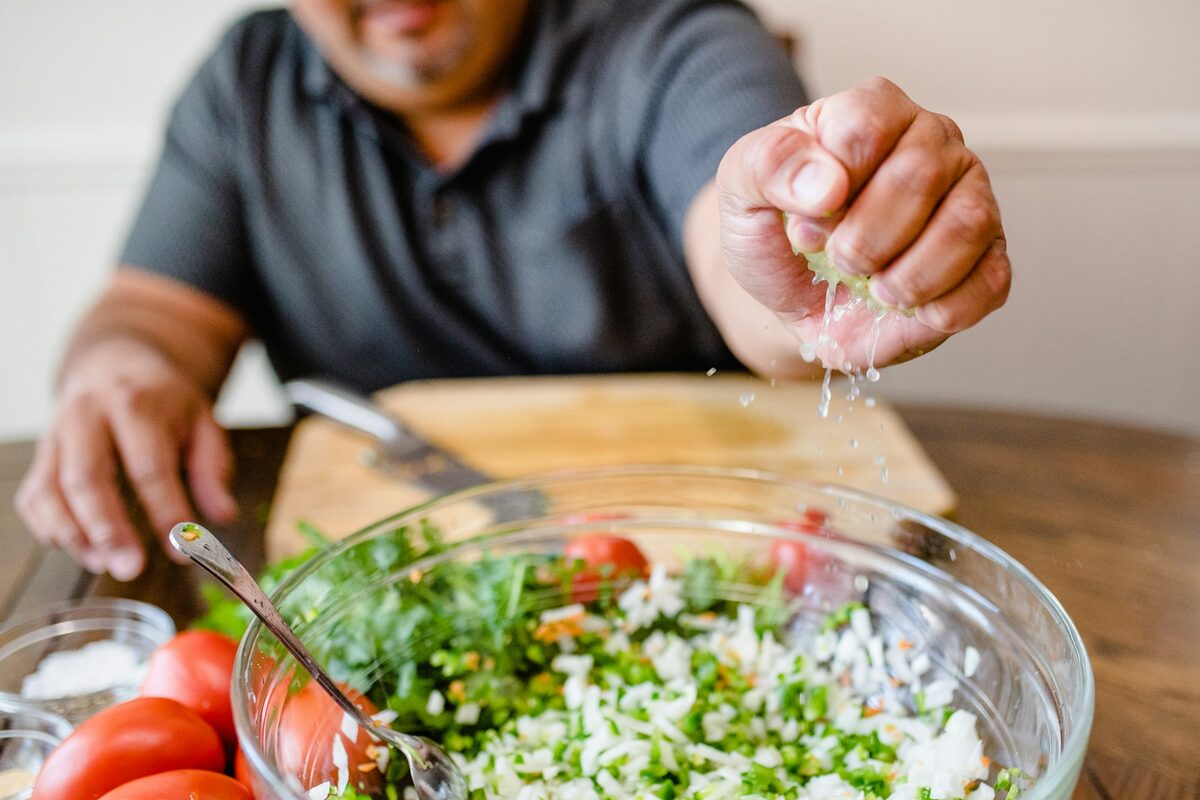
For years, "season to taste" annoyed me as a reader before I understood it as a cook. It felt like a cop-out, the recipe equivalent of a teacher saying "use your judgment" right when you most needed a clear answer. I wanted a number. Three-quarters of a teaspoon, not a vague instruction to trust myself with something I'd just spent an hour learning to make.
It took me a long time, and a lot of oversalted and underseasoned dinners, to understand that the number was never actually the point. A recipe can tell you the ingredients and the method with real precision. It cannot tell you how salty your specific can of tomatoes is, how reduced your specific batch of broth got, or how your specific tongue registers salt on a given evening. Those things vary every single time, even when you follow the same recipe twice in the same kitchen.
"Season to taste" isn't the recipe giving up on you. It's the recipe admitting the limits of what a fixed set of instructions can actually promise, and handing the last and most important decision back to the only person who can actually make it: whoever is standing at the stove, tasting the food.
Salt is not actually one ingredient
This is the part that took me embarrassingly long to understand. Kosher salt, table salt, and sea salt are not interchangeable teaspoon for teaspoon — table salt is denser and saltier by volume than most kosher salt, sometimes by close to double. A recipe written with Morton kosher salt in mind and followed with Diamond Crystal, which is noticeably less dense, will come out under-seasoned if you measure by volume instead of taste. No fixed number survives that kind of variation. Tasting does.
Ingredients arrive with their own hidden seasoning
Canned tomatoes, broth, cured meats, and cheese all carry wildly different amounts of built-in salt depending on the brand, and sometimes depending on the specific can. I've used two brands of chicken broth in the same recipe, a week apart, and needed almost double the added salt with the lower-sodium one to land in the same place. A recipe writer testing with one brand simply cannot account for every brand you might be standing in front of at the store.
Reduction concentrates everything, including mistakes
As a sauce or soup reduces, you're not just thickening it — you're concentrating every seasoning already in the pot. A sauce that tastes correctly seasoned at the start of a long simmer can turn startlingly salty by the end, simply because the water has cooked off and left the salt behind in a smaller volume of liquid. The only way to catch that honestly is to taste along the way, not to trust the amount you added at the beginning.
Your own palate is a real, variable instrument
How salty something tastes to you depends on more than the dish — it depends on what you ate an hour ago, whether you're congested, even how much sleep you got the night before, since taste perception measurably dulls with fatigue. A recipe can't adjust for the fact that you tasted a very salty snack twenty minutes ago and now everything reads as under-seasoned by comparison. Only tasting in the moment accounts for the moment you're actually in.
How I actually season to taste, step by step
Add salt gradually, in small amounts, tasting after each addition rather than guessing at a final number up front. Taste at room temperature when possible, since heat and cold both dull how strongly you perceive salt, which is part of why soup often needs a second seasoning check once it's cooled slightly into the bowl. And taste more than once during a long cook, not just at the very end, since a dish's seasoning needs can genuinely shift as it reduces.
What this instruction is actually asking of you
"Season to taste" is the recipe writer's way of telling you that cooking isn't just following instructions, it's paying attention. That's not a failure of the recipe. It's the one step that no amount of precise measurement could ever replace, and honestly, it's the step that turns a technically correct dish into one that actually tastes like something you made on purpose.
Where this applies beyond salt
Once I understood this about salt, I started noticing the same logic everywhere else a recipe hedges with language like "to taste" or "as needed." Acid is the clearest second example — a squeeze of lemon or a splash of vinegar needed to brighten a dish varies enormously depending on how ripe your lemon was, how long your vinegar has been open, and how rich the rest of the dish turned out. Sweetness in a tomato sauce depends on how ripe and in-season the tomatoes actually were, which no fixed teaspoon measurement can account for consistently across a year of grocery store produce.
Heat is another one. A recipe calling for "one jalapeño" is really gambling on a vegetable whose spiciness can vary by a factor of ten depending on growing conditions, which is why a lot of recipe writers I respect have started adding chile flakes gradually and tasting, rather than committing to a whole pepper up front.
What I'd tell a nervous new cook
If you're new to cooking and "season to taste" makes you anxious, start smaller than feels reasonable. Add a pinch, taste, add another pinch, taste again. You genuinely cannot ruin most dishes by under-seasoning slightly and fixing it at the table with a little extra salt on your own plate. You can absolutely ruin a dish by dumping in your best guess all at once and discovering too late that your guess was wrong. Tasting as you go isn't a sign you don't know what you're doing. It's the actual skill the rest of the recipe was training you toward the whole time.